Haute-Savoie
The Alps, Lake Annecy, Mont-Blanc and mountain villages: Haute-Savoie concentrates in a single department some of France's most diverse mountain and lake landscapes.
Haute-Savoie is an Alpine department in southeastern France, bordered by Switzerland and Italy. It encompasses the Mont-Blanc massif — the highest peak in the Alps — the shores of Lake Geneva, the Fier gorges, and some of Europe's most visited ski resorts. Between Alpine meadows, Savoyard villages and lakeside towns, the region offers a rare density of landscapes and heritage for a single area.
Practical Information at a Glance
- Access: Geneva-Cointrin airport (Switzerland), less than an hour from most resorts; Annecy and Cluses stations on the Paris-Lyon-Geneva rail line.
- Seasons: skiing December to April; hiking and cycling June to September; peaceful autumn, ideal for lakes.
- Suggested duration: 5 to 10 days to combine mountains, lakes and villages.
- Language: French; some bilingual Franco-Savoyard signs in valleys.
- Currency: euro.
What to See
The department divides into several distinct regions. The Mont-Blanc Area concentrates Chamonix, the Mer de Glace glaciers and the Aiguille du Midi. The Annecy Area features Lake Annecy, renowned for the clarity of its waters, and the medieval old town. The Chablais region stretches along Lake Geneva to Évian-les-Bains and Thonon-les-Bains. The Aravis and Faucigny valleys offer wilder, less touristy terrain.
History and Context
Savoy was long an independent state under the House of Savoy before its attachment to France in 1860, by plebiscite under Napoleon III. This past explains the architecture of towns, local dialects and a distinct cultural identity. The Haute-Savoie department was created at that same time, separated from Savoy proper.
Modern mountaineering was born here: the first ascent of Mont-Blanc by Balmat and Paccard dates to 1786, from Chamonix. Since then, the Chamonix valley has become the world capital of mountaineering.
Highlights of the Visit
Chamonix and the Mont-Blanc Massif
The Aiguille du Midi cable car rises to 3,842 m, offering a direct view of the summit at 4,808 m. The Mer de Glace, accessible by the Montenvers train, is France's largest glacier. In summer, the Tour du Mont-Blanc — an international hiking trail — attracts walkers from around the world.
Lake Annecy
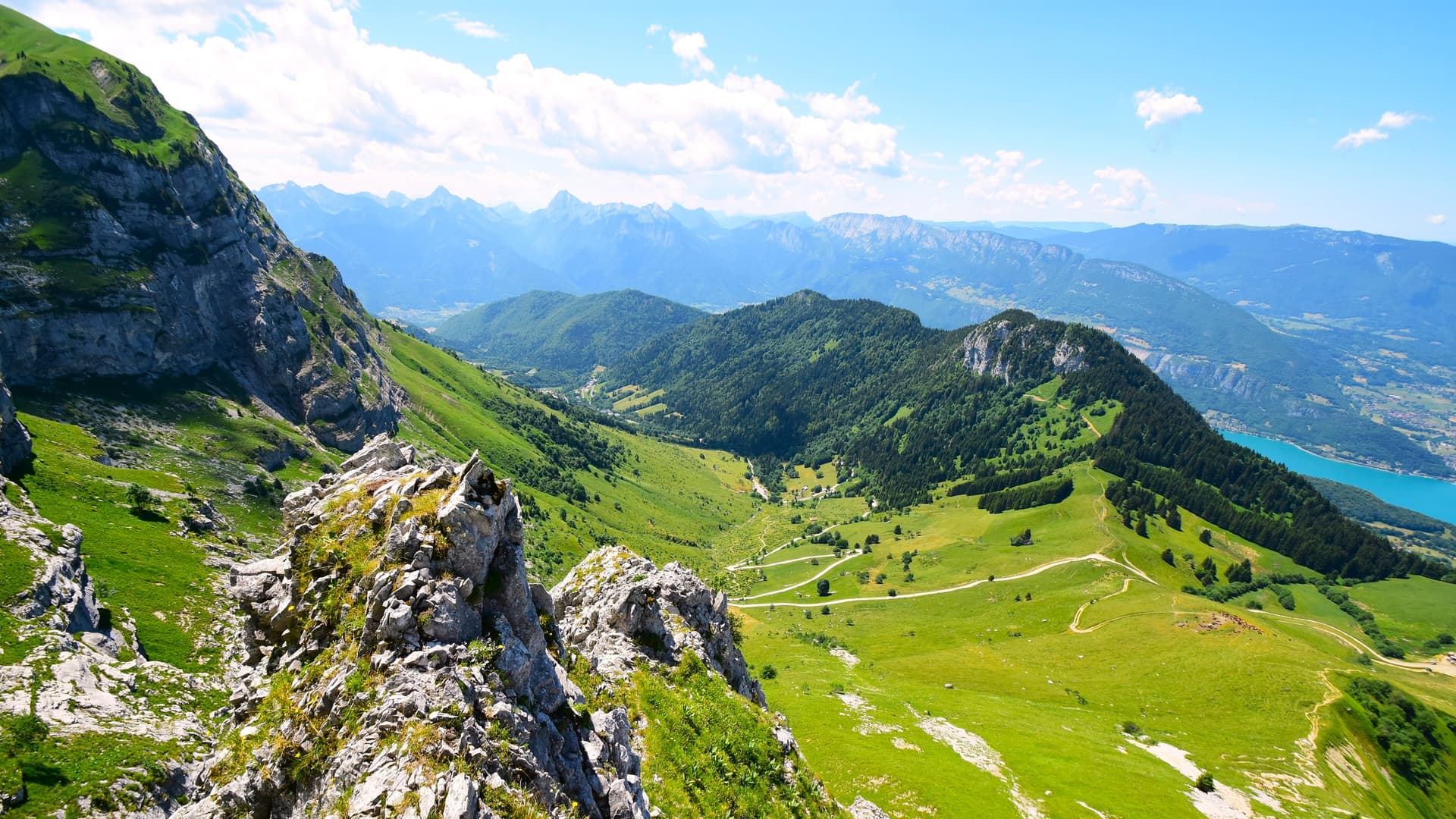
Surrounded by mountains, Lake Annecy is fed by underground springs. The old town of Annecy, with its canals, medieval castle and colourful arcades, forms the historic heart of the department. The Tuesday and Friday morning market is one of the liveliest in the region.
Fier Gorges
A few kilometres from Annecy, the Fier gorges are carved by the Fier river through compact limestone. Metal walkways allow you to walk along the walls at water level.
Évian-les-Bains and Lake Geneva
Évian is known for its mineral springs and Belle Époque architecture. Lake Geneva, shared with Switzerland, is the largest lake in Western Europe. Boats regularly connect the French and Swiss shores.
Ski Resorts
Megève, Morzine, Les Gets and the Portes du Soleil domain are among the best-known winter destinations. Megève retains an Alpine village character with wooden chalets and pedestrian streets.
Photography Tips
- Mont-Blanc photographs best from Plan de l'Aiguille or from Chamonix early in the morning, before clouds rise.
- Lake Annecy is calmest and most reflective at dawn; avoid peak summer hours (10am–5pm).
- On Aiguille du Midi, bring a polarising filter: glare from snow and ice is intense.
- Villages in the Aravis (La Clusaz, Le Grand-Bornand) offer Alpine meadow scenes with chalets and Abondance cattle herds in July–August.
Location and Access
Haute-Savoie (department 74) is accessible from Paris by TGV via Geneva or Annecy. The A40 motorway (the "White Road") connects Mâcon to Chamonix. Geneva-Cointrin airport serves the entire department with shuttles to the main resorts. In summer, regional bus services connect Annecy, Chamonix and neighbouring valleys.
Nearby Attractions
- Annecy — departmental capital, medieval old town and lake.
- Chamonix-Mont-Blanc — mountaineering capital, access to glaciers and Aiguille du Midi.
- Megève — elegant Alpine village, skiing and Savoyard cuisine.
- Évian-les-Bains — mineral springs, Belle Époque architecture, Lake Geneva shores.
- Fier Gorges — limestone canyon accessible from Annecy.
- Morzine — gateway to the Portes du Soleil ski domain.
Frequently asked questions
July–August for hiking and lakes; December–March for skiing. Spring (May–June) and autumn (September–October) are quieter and allow you to enjoy the landscapes without crowds.
A car is recommended for secondary valleys and Alpine villages. The main routes (Annecy, Chamonix, Évian) are well served by train and coaches.
Yes. Annecy and Chamonix are linked by road in about an hour and a half. A 5 to 7-day stay allows you to visit both areas comfortably.
Savoyard fondue, raclette, tartiflette (reblochon gratin) and diots (sausages in white wine) are local specialities. Reblochon, Abondance and Beaufort are the department's emblematic cheeses.
The cable car operates most of the year, with occasional technical closures. Weather conditions at altitude can cause service interruptions; check with the operator before departing.
Yes. Resorts offer beginner areas in winter, and Lake Annecy shores have supervised beaches in summer. The Fier gorges and Montenvers train suit children from a certain age.