Pitlochry
Pitlochry
Pitlochry, in the heart of Perthshire, blends Victorian heritage, a century-old whisky distillery and spectacular landscapes. A dam, salmon ladder and autumn forests make it an unmissable stop in the Highlands.
Pitlochry is a small Victorian town nestled in the Atholl valley, at the heart of the Scottish Highlands. Crossed by the Tummel River, it combines moorland scenery, whisky distilleries and remarkable natural heritage. Its central location makes it an ideal base for exploring the Cairngorms and Perthshire.
Practical information at a glance
- Access: railway station on the Inverness–Edinburgh line, regular services from Perth and Inverness.
- Suggested duration: 1 to 2 days to combine the town, distillery and dams.
- Attire: waterproof clothing recommended year-round; hiking boots for trails.
- Accessibility: town centre generally accessible; some natural trails not developed.
What to see
Pitlochry Dam on the Tummel is one of the most photographed features in town. At its base, a glass-fronted salmon ladder allows visitors to observe fish swimming upstream between late summer and autumn. Blair Athol Distillery, one of Scotland's oldest, offers guided tours with tastings.
The Pitlochry Festival Theatre, situated on the riverside, programmes an eclectic season each summer. Faskally Park, surrounding the artificial loch created by the dam, offers forest walks easily accessible on foot from the town centre.
History and context
Pitlochry developed as a Victorian spa town after the railway arrived in 1863. Queen Victoria, who stayed regularly at Balmoral, helped popularize the region. The hydroelectric dam, built in the 1940s-1950s by the North of Scotland Hydro-Electric Board, transformed the Tummel valley and created Loch Faskally.
Highlights of your visit
The salmon ladder
Integrated into the dam, this installation allows Atlantic salmon to bypass the obstacle during their migration. A glass observation centre overlooks the successive pools. Peak activity runs from late August to October.
Blair Athol Distillery
Founded in 1798, Blair Athol produces a single malt that goes into Bells whisky. Guided tours cover the malting process, distillation and maturation in casks. The shop stocks limited editions hard to find elsewhere.
The Loch Faskally trail
This walking circuit follows the wooded shores of the artificial loch created by the dam. Beech and larch trees put on a particularly striking display in autumn. The trail connects Pitlochry to the village of Killiecrankie in around two hours.
Killiecrankie Pass
A few kilometres north, this wooded defile is the site of an 1689 battle between Jacobites and government troops. The National Trust for Scotland manages an interpretation centre and trails overlooking the Garry gorge.
Photography tips
Late-afternoon golden light ideally illuminates the dam and Loch Faskally. In autumn, the reflections of russet foliage on the water are particularly striking from the footbridge. For the salmon ladder, opt for quieter weekday hours to avoid window glare from crowds.
Location and access
Pitlochry is located in Perth and Kinross, approximately 45 km north of Perth via the A9. The station is served several times daily from Edinburgh (around 1 hour 45 minutes) and Inverness. By car, the A9 is the main route; parking is available in the town centre. The compact town centre is entirely walkable.
Nearby places accessible on foot or a short drive include Killiecrankie Pass and Blair Castle to the north.
Nearby attractions
- Blair Castle — white ducal residence at Blair Atholl, seat of Europe's only private regiment authorized to bear arms.
- Killiecrankie Pass — spectacular wooded gorge with a Jacobite battle site managed by the National Trust for Scotland.
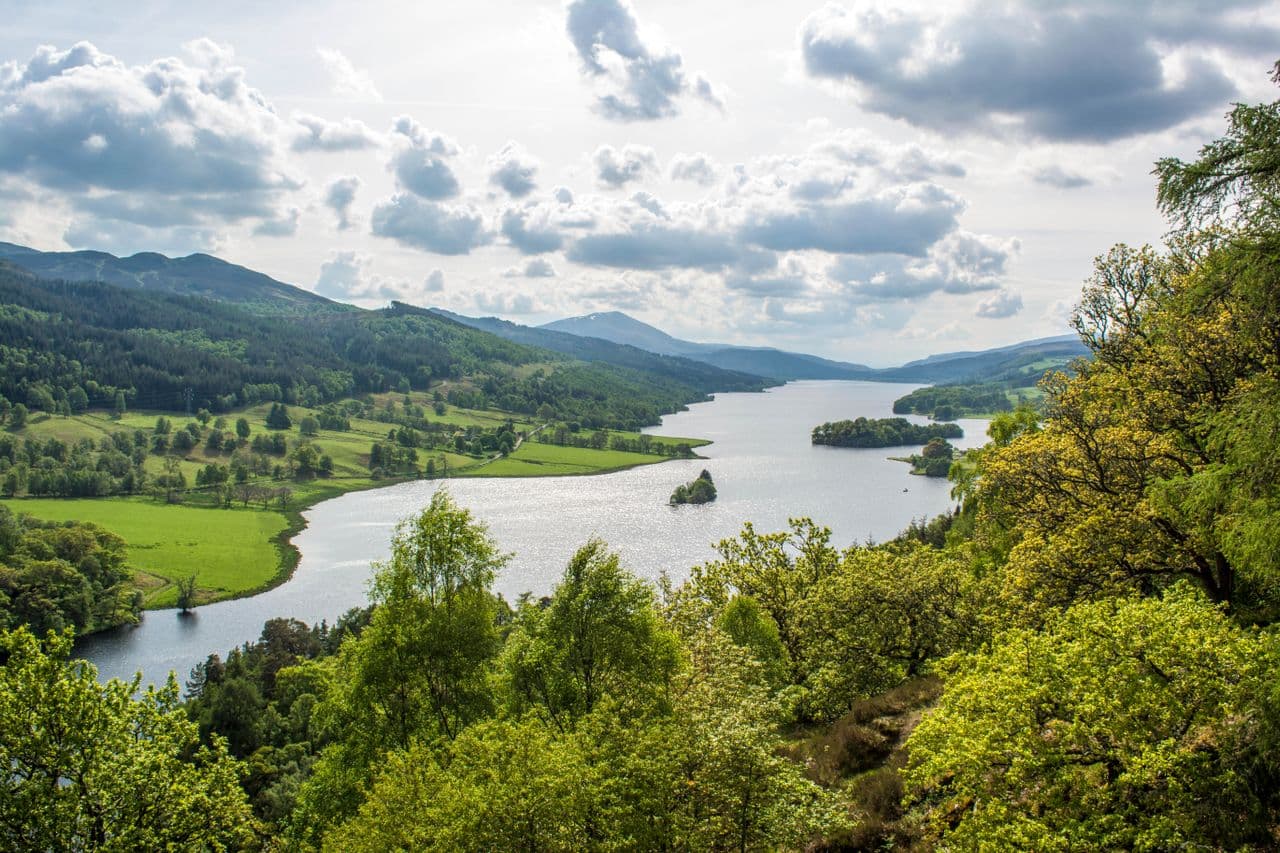
- Loch Tummel — elongated lake west of Pitlochry, famous for Queen's View offering panoramic vistas of Schiehallion.
- Aberfeldy — neighbouring town on the Tay, known for Dewar's Distillery and the 18th-century Wade Bridge.
Frequently asked questions
Autumn (September-October) combines forest colours, salmon runs and fewer crowds. Summer is peak season, with the theatre festival in full swing.
Guided tours are usually available by walk-in, but advance booking is recommended in high season to guarantee a place.
Blair Castle is located about fifteen kilometres north via the A9. A half-day suffices for the visit; it's easy to combine both in one day with a car.
The observation centre is open seasonally, but salmon run mainly from late August to October. Outside this period, the pools may be empty.
Yes, the railway station is served from Edinburgh and Inverness. The town centre, dam and distillery are accessible on foot from the station. For Killiecrankie or Blair Atholl, a taxi or car rental is more convenient.
Want to discover this destination?
Our local advisors design your tailor-made trip.