Sixt-Fer-à-Cheval
Sixt-Fer-à-Cheval
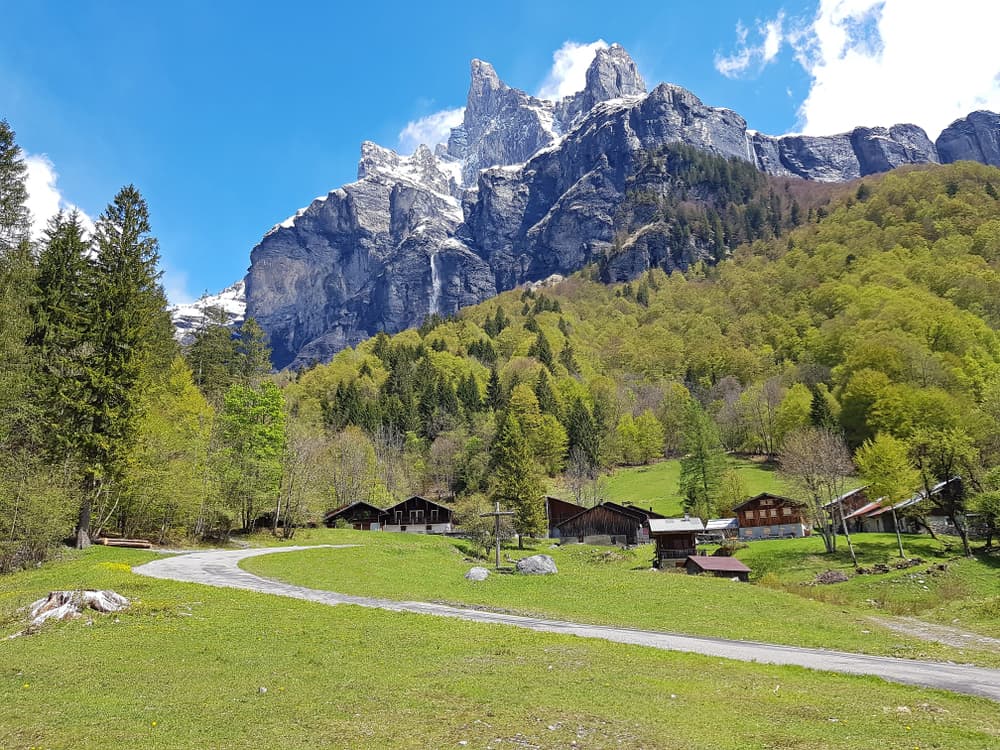
At the heart of the Giffre valley, Sixt-Fer-à-Cheval brings together a glacier cirque designated as a nature reserve, some thirty waterfalls and a 12th-century Romanesque abbey—a rare alpine site in Haute-Savoie.
Sixt-Fer-à-Cheval is a Haute-Savoie village nestled deep in the Giffre valley, at the entrance to the Fer-à-Cheval cirque. This protected natural site, dominated by limestone cliffs towering over 500 metres and some thirty waterfalls, ranks among the largest glacier cirques in the Alps. The village itself preserves a 12th-century Premonstratensian abbey, giving it a dual identity: natural heritage and historical patrimony.
Quick Facts at a Glance
- Cirque access: road open to vehicles to the Fer-à-Cheval car park; seasonal shuttles from Sixt-Fer-à-Cheval during summer (reduced motorised traffic).
- Entry: free access to the cirque on foot; paid parking in season.
- Recommended duration: half-day for the cirque alone, full day to combine hiking and village exploration.
- What to wear: hiking boots recommended as soon as you leave the main trail.
- Best season: June to September for waterfalls at full flow; winter for frozen waterfalls and snowshoeing.
What to See
The Fer-à-Cheval cirque forms a semi-circular rocky amphitheatre roughly 4 km in diameter. In summer, snowmelt feeds some thirty waterfalls that cascade down the rock walls. The Rouget waterfall, accessible on foot from the village, is among the most spectacular in Haute-Savoie. The village preserves the Premonstratensian abbey of Sixt, founded in the 12th century, whose Romanesque church remains visible today.
History and Context
Sixt Abbey was founded around 1144 by Premonstratensian canons. It played a central role in developing the Giffre valley during the Middle Ages. The natural site of the cirque was designated a national nature reserve, protecting remarkable alpine flora and species such as ibex and chamois. The reserve covers several thousand hectares between the cirque and the Fer-à-Cheval plateau.
Highlights of Your Visit
The Fer-à-Cheval Cirque
The cirque floor trail (marked, relatively flat) runs alongside the Giffre and allows you to approach the waterfalls. In June and July, water flow is at its peak. The limestone walls reach 500 to 700 metres in height at certain points, creating distinctive acoustics and lighting in mid-morning.
The Rouget Waterfall
Nicknamed "the queen of alpine waterfalls," it drops in two tiers from a total height of approximately 70 metres. The trail from Sixt-Fer-à-Cheval is well-marked and manageable for families. In winter, it partially freezes and attracts ice climbing enthusiasts.
The Premonstratensian Abbey
The sober, well-preserved Romanesque abbey church merits a visit. The cloisters and convent buildings have been partially renovated over the centuries. The entire complex is listed as a historical monument.
Hikes to the Alpine Pastures
From the cirque, several marked trails lead up to the Prazon pastures, the Sagerou pass, or the Saix plateau. These paths offer sweeping views of the cirque and, on clear days, across to the Mont-Blanc massif.
Photography Tips
Morning light (before 10 a.m.) illuminates the eastern walls of the cirque without backlighting. Late afternoon captures waterfalls in soft, raking light. For the Rouget waterfall, position yourself slightly below to incorporate vegetation in the foreground. In winter, photograph frozen waterfalls in overcast conditions to avoid harsh reflections on ice.
Location and Access
Sixt-Fer-à-Cheval lies in the Giffre valley, Haute-Savoie (74). The village is accessible from Samoëns (approximately 8 km) via the D907. Samoëns has a station on the Mont-Blanc Express line (Saint-Gervais – Vallorcine), but reaching Sixt from there requires a bus or private vehicle. In summer, shuttles reduce motorised traffic in the cirque. The village sits about 30 km from Cluses and less than an hour from Chamonix.
Accessibility: the main cirque trail is partially accessible by stroller or wheelchair on the paved section near the car park.
Nearby
- Samoëns — a village ranked among France's Most Beautiful Villages, home to the alpine garden la Jaÿsinia and a medieval core.
- Gorges des Tines — gorges carved by the Giffre between Samoëns and Sixt, accessible on foot from the road.
- Morzine — Portes du Soleil resort about 30 km away, for skiing or mountain biking depending on season.
- Chamonix-Mont-Blanc — the capital of mountaineering, reachable in less than an hour via the Forclaz pass or through Cluses.
Want to discover this destination?
Our local advisors design your tailor-made trip.