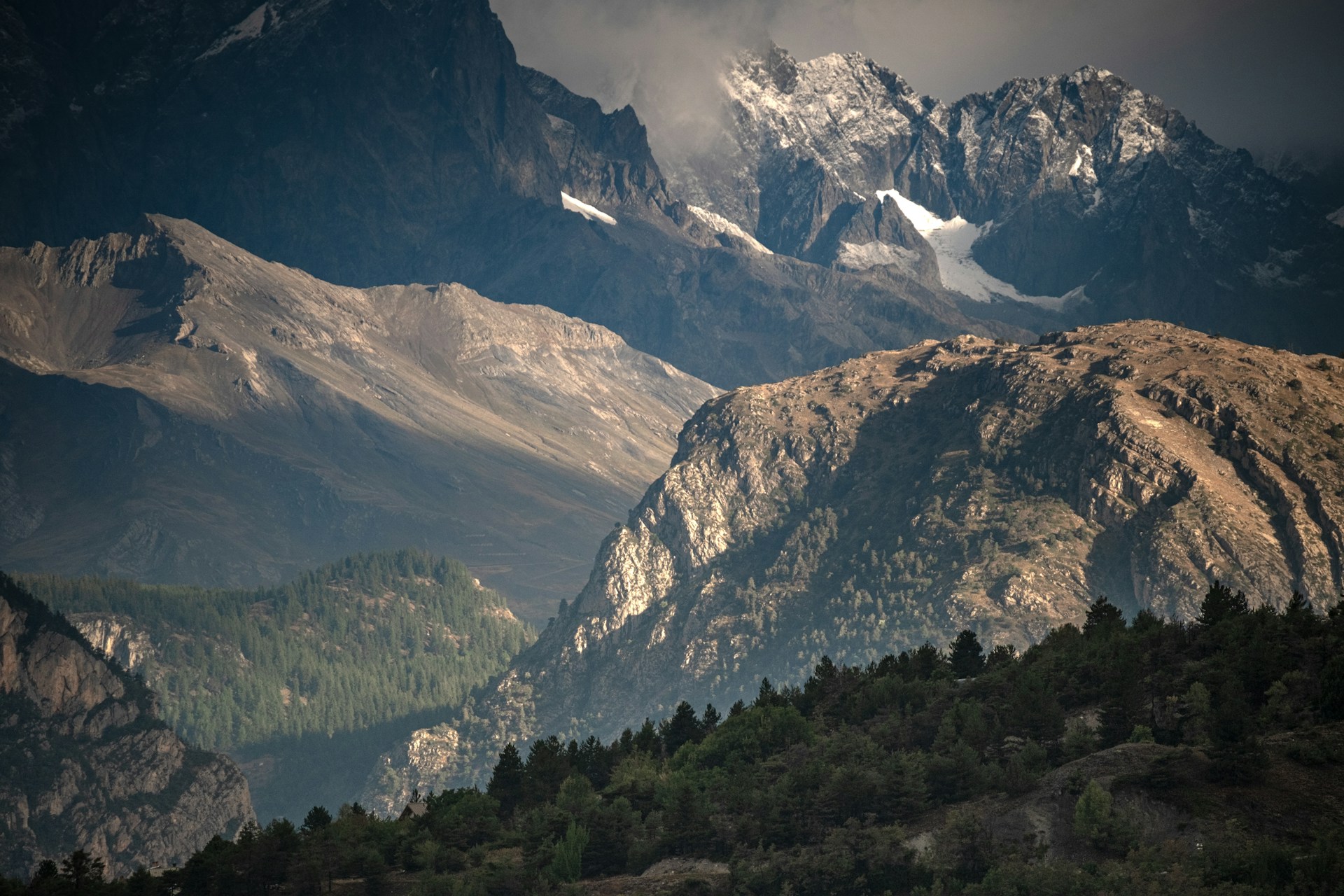
Massif des Grandes Rousses
Between Alpe d'Huez and the Romanche valley, the Massif des Grandes Rousses offers glaciers, high-altitude lakes and panoramic views over the Écrins. Wild and uncrowded hiking terrain in Oisans.
The Massif des Grandes Rousses stretches between Oisans and the Romanche valley, in the Isère department. Peaking at Lac Blanc summit (3,323 m), it forms the glaciated hinterland of the Alpe d'Huez ski resort. Glaciers, high-altitude lakes and rocky ridges make it an ideal terrain for summer hiking and high-altitude skiing. The massif sees fewer visitors than neighbouring Belledonne or the Écrins, preserving its wild character.
Essential information at a glance
- Main access: from Alpe d'Huez (D211) or Oz-en-Oisans, connected to Grenoble via the RN91 through Bourg-d'Oisans.
- Gear: mountain equipment essential at altitude — hiking boots, windbreaker, high-SPF sunscreen.
- Recommended duration: one day for a hike to Lac Blanc; several days for a complete circuit of the massif.
- Accessibility for people with reduced mobility: limited at altitude; resort surroundings (Alpe d'Huez) offer some facilities.
- Recommended period: July–September for hiking; December–April for skiing.
What you'll see
The massif concentrates several glaciers, including Sarenne Glacier, one of the most accessible in Oisans. High-altitude lakes — Lac Blanc, Lac Besson, Lacs de l'Ouest — punctuate hiking itineraries. The ridges offer unobstructed views of the Écrins, Belledonne and, on clear days, Mont-Blanc.
History and context
The massif was progressively mapped during the 19th century through major French alpine campaigns. The ski boom of the 1930s–1950s transformed its slopes: Alpe d'Huez, created in 1936, sits directly on its flanks. Sarenne Glacier once enabled summer skiing, an activity now reduced due to glacier retreat.
Highlights of your visit
Lac Blanc
Accessible on foot from Signal de l'Homme or by cable car from Alpe d'Huez, Lac Blanc (approx. 2,650 m) mirrors the surrounding rocky ridges. The round-trip hike from the resort is manageable for regular hikers.
Sarenne Glacier
Sarenne Glacier descends toward the pass of the same name, a key point on the famous Alpe d'Huez cycling descent. In summer, it remains visible from several marked trails across the massif.
Lacs de l'Ouest and Lac Besson
These less-known plateau lakes are reached via trails from Oz-en-Oisans or Vaujany. They offer a peaceful alternative to busier itineraries on the Alpe d'Huez side.
Photography tips
Early morning light (7am–9am in summer) is ideal for photographing high-altitude lakes before hikers arrive. Reflections are sharpest in still conditions, common early in the day. From the ridges, evening backlight reveals the Écrins relief in the background. Avoid midday in summer: light is harsh and convective clouds often obscure peaks.
Location and access
The massif is framed by the Romanche valley to the south and the Oisans plateau. From Grenoble, allow roughly 1 hour 15 minutes to Bourg-d'Oisans via the RN91, then the climb to Alpe d'Huez or Oz-en-Oisans. Seasonal shuttles connect Grenoble to Alpe d'Huez in winter and summer. High-altitude accessibility for people with reduced mobility remains challenging outside of cable cars.
Nearby places with internal links:
- Alpe d'Huez — ski resort and main starting point for the massif.
- Massif des Écrins — neighbouring national park, accessible from Bourg-d'Oisans.
- Bourg-d'Oisans — hub town at the foot of the massif, services and supplies.
Around the area
- Col du Galibier — iconic Tour de France alpine pass, east via the Route des Grandes Alpes.
- Lac du Verney — reservoir lake at the end of the Romanche valley, peaceful setting.
- Vaujany — high-altitude village on the western slope, alternative access to the massif by cable car.
Frequently asked questions
July through September, trails are clear and high-altitude lakes accessible. Before July, snow may persist on passes and make some routes technical.
High-ankle hiking boots are recommended. A windbreaker and high-SPF sunscreen are essential at altitude, even in good weather.
Yes. Alpe d'Huez is the natural entry point: cable cars allow you to gain elevation quickly in summer to reach the massif's trails.
No photographic restrictions apply in this mountain massif. Drones: check current regulations in areas near the Écrins park.
Ski touring and snowshoeing itineraries are viable, but require knowledge of avalanche risk. Check Météo-France's avalanche bulletin before any departure.
Discover Massif des Grandes Rousses with our itineraries
All our tours →
Want to discover this destination?
Our local advisors design your tailor-made trip.