Château-Chalon
Château-Chalon
A medieval village ranked among France's Most Beautiful Villages, Château-Chalon dominates its Jura vineyards and is home to the country's only 100% yellow wine AOC.
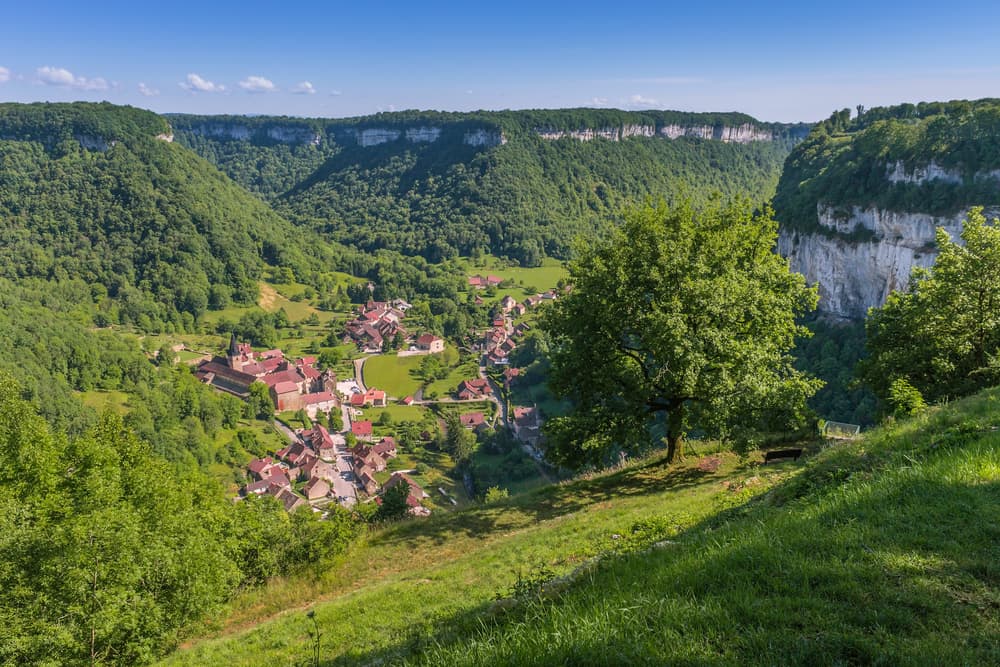
Perched on a rocky outcrop overlooking the vineyards of the Jura, Château-Chalon is a medieval village ranked among France's Most Beautiful Villages. Its worldwide renown stems from its yellow wine, aged under a veil of yeast in oak barrels for more than six years. Cobbled alleyways, honey-coloured stone houses, and sweeping views across the Jura's natural amphitheatres make it a distinctive destination in the region.
Quick reference guide
- Getting there: Car recommended — the village has limited public transport; parking at the foot of the village.
- Duration: 2 to 3 hours for the village and vineyards.
- What to wear: Walking shoes advised, with cobbled and sloped alleyways.
- Accessibility: Limited wheelchair access due to terrain and cobblestones.
What to see
The village is best explored on foot, along alleyways lined with winemaker's houses dating from the 15th–17th centuries. The Romanesque Church of Saint-Pierre dominates the promontory. The remains of medieval ramparts offer unobstructed views over the terraced vineyards and the Seille valley. Several winemakers' cellars offer tastings of yellow wine and straw wine.
History and context
In the Middle Ages, Château-Chalon was a powerful Benedictine priory that controlled local wine production. The priory's abbesses had the authority to permit or forbid the harvest according to the quality of the vintage — a tradition that endures today: the winemakers' syndicate can still downgrade the appellation if a vintage proves insufficiently good. This collective oversight is unique in France.
Highlights of your visit
Yellow wine and the cellars
The Château-Chalon appellation is France's only 100% yellow wine AOC. Made from the Savagnin grape, this wine is aged under a veil of yeast for a minimum of six years and three months. The village's cellars explain this unique process and allow you to taste directly from producers.
The Church of Saint-Pierre
A Romanesque building from the 11th–12th centuries, the church retains a sculpted portal and a simple nave characteristic of Jura Romanesque art. It occupies the site of the former Benedictine priory.
The ramparts and panorama
The remains of medieval fortifications line the plateau's edge. From here, the view stretches across terraced vineyards, natural amphitheatres, and on clear days, the first foothills of the Jura.
The vineyard trail
A marked path descends into the vineyard from the village. It crosses plots classified under the Château-Chalon AOC and explains, via interpretive panels, the distinctive geology of the terroir (Liassic blue marl).
Photography tips
Morning light is ideal for photographing the honey-coloured stone facades without backlighting. In autumn, the vineyards turn red and gold — the most photogenic season. From the ramparts, frame toward the southwest to capture both the vineyard and the valley. The narrow alleyways suit wide-angle lenses.
Location and access
Château-Chalon is located in the Jura département (39), about twenty kilometres south of Lons-le-Saunier. By car from Lons-le-Saunier, take the route via Voiteur. The main car park is at the foot of the village; the walk up takes just a few minutes. No regular bus service conveniently serves the village for visitors.
Nearby attractions
- Baume-les-Messieurs — medieval abbey and dramatic natural amphitheatre, about fifteen kilometres to the north.
- Lons-le-Saunier — capital of the Jura, birthplace of Rouget de Lisle, with its arcaded streets and archaeological museum.
- Cirque de Baume — limestone cliffs and viewpoints over the natural amphitheatre, accessible from Baume-les-Messieurs.
- Arbois — capital of Jura wines, the city of Pasteur, about thirty kilometres to the north.
Frequently asked questions
Autumn (September–October) is particularly beautiful: the harvest brings life to the village and the vineyards display rich colours. Spring offers soft light and fewer crowds. Summer is pleasant but the village can be busy in July and August.
Yes. Several wine estates in the village open their cellars for sales and tastings. It's advisable to check opening hours directly with each producer before your visit.
Two to three hours are sufficient to walk through the village, along the ramparts, and down the vineyard trail. Allow longer if you plan to visit cellar tastings.
Accessibility is limited: the alleyways are cobbled and sloped, and the vineyard trail is not adapted for wheelchairs. Some sections of the village remain accessible from the car park.
Yes. Baume-les-Messieurs and its abbey are about fifteen kilometres away. Arbois, the capital of Jura wines, is easily visited on the same day by car.
Photography is generally permitted in rural French churches, without flash or tripod. Please respect any services if the church is in use during your visit.
Discover Château-Chalon with our itineraries
All our tours →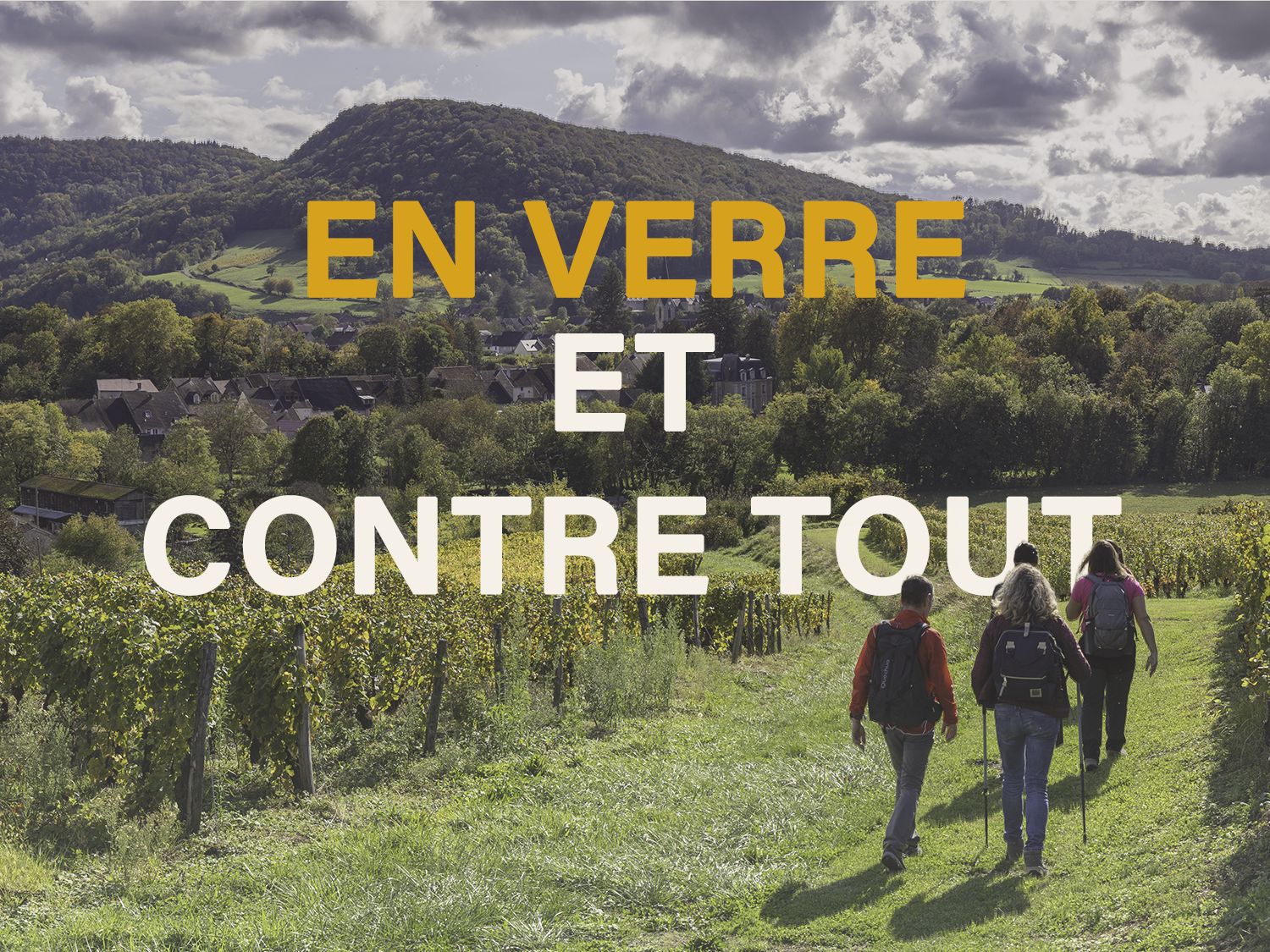
Want to discover this destination?
Our local advisors design your tailor-made trip.