Dole
Dole
Former capital of Franche-Comté, Dole retains a remarkable Renaissance center: the Notre-Dame Collegiate Church, the Tanners' Quarter, and Louis Pasteur's birthplace—all discoverable in a single day.
Dole is a town in the Jura region of Bourgogne-Franche-Comté, nestled along the banks of the Doubs river and the Tanners' Canal. Once the capital of Franche-Comté before Besançon, it preserves a dense historic center: Renaissance townhouses, cobbled streets, and the Notre-Dame Collegiate Church dominating the roofline. Dole is also the birthplace of Louis Pasteur, lending it a distinctive scientific and heritage identity.
Quick practical guide
- Access: Well-served SNCF railway station from Dijon (roughly 25 minutes) and Besançon; A36 motorway.
- Recommended duration: One full day for the historic center and museums; two days to explore the surrounding area.
- Dress code: No specific requirements in town; respectful dress for the collegiate church.
What to see
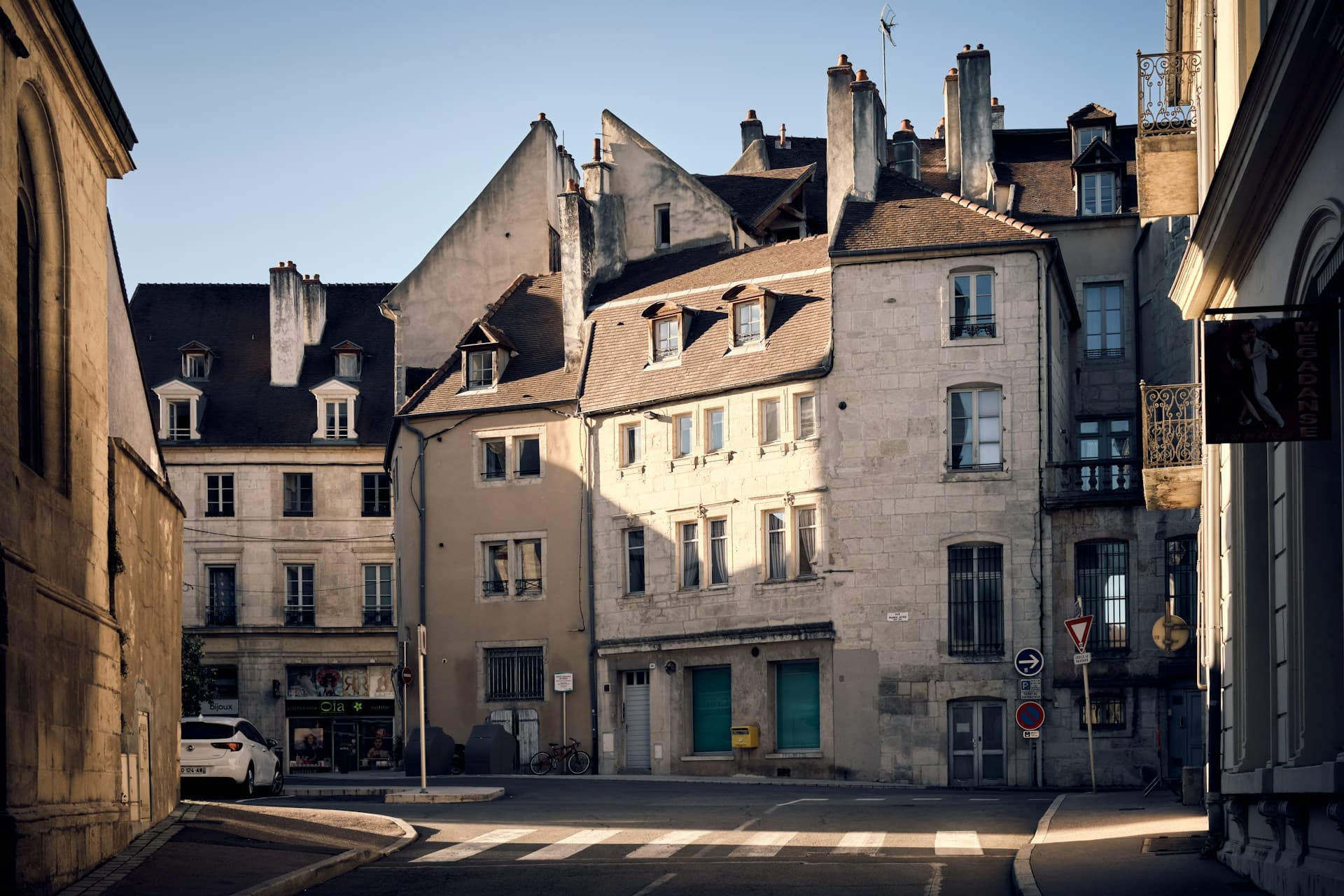
The town center contains the essentials. The Notre-Dame Collegiate Church (16th century) commands attention with its 73-meter bell tower soaring over the lower town. Along the Tanners' Canal, former artisans' homes form a charming district. The Louis Pasteur Birthplace, now a museum, chronicles the life and work of the renowned scientist. Renaissance townhouses line the streets of Bourg and Sous-Préfecture.
History and context
Dole served as the capital of Franche-Comté under Spanish rule until Louis XIV's conquest in 1674. The town famously withstood Condé's siege in 1636—a defining moment in its identity. Following the French conquest, Louis XIV transferred the parliament and university to Besançon, beginning Dole's relative decline. This history explains the architectural richness of its center, preserved in its Renaissance and Baroque state.
Highlights of your visit
The Notre-Dame Collegiate Church
Built between 1509 and 1588, the collegiate church blends flamboyant Gothic and Renaissance styles. Its bell tower, visible for kilometers around, is the symbol of the town. The interior shelters richly decorated side chapels and a historic organ.
Louis Pasteur's birthplace
Pasteur was born here in 1822. The museum occupies the family home, reconstructed as it was in the 19th century. The collections showcase scientific instruments, documents, and personal objects belonging to the great scientist. A brief but rich experience.
The Tanners' Quarter
Along the canal, this medieval artisanal district is among the best-preserved in Franche-Comté. Half-timbered houses and footbridges spanning the water create a calm atmosphere, far removed from tourist hustle.
The covered market and Place Nationale
Place Nationale, Dole's commercial heart, comes alive on market days. The market halls and surrounding Renaissance facades offer a window into the town at its height.
Etiquette and visiting guidelines
- Respectful dress required inside Notre-Dame Collegiate Church.
- Photography permitted in the church, without flash on artworks.
- Silence expected during religious services.
Photography tips
The church bell tower photographs best from rue de Besançon or the higher reaches of the Tanners' Quarter, in late afternoon light when shadows are long. The Tanners' Canal is most photogenic in the morning, before crowds arrive. Reflections in the water are sharpest on calm days.
Location and access
Dole is located in the Jura department (39), approximately 25 km east of Dijon and 50 km west of Besançon. The SNCF railway station is a few minutes' walk from the historic center. By car, the A36 motorway reaches the town directly. The center is compact and walkable; most sites are accessible to people with reduced mobility, except for certain steep cobbled streets.
In the surrounding area
- Arc-et-Senans Royal Saltworks — a Ledoux masterpiece and UNESCO World Heritage site, about thirty kilometers away.
- Besançon — the regional capital with its Vauban citadel and museums, approximately 50 km away.
- Dijon — capital of the Dukes of Burgundy, about 25 km to the west.
- Chaux Forest — one of France's largest state forests, at Dole's doorstep.
Frequently asked questions
Spring and summer offer the finest conditions for strolling the historic center and walking along the canal. Autumn is pleasant and less crowded. Winter remains viable for museums, though some sites operate on reduced hours.
One day suffices for the collegiate church, Pasteur's house, and the Tanners' Quarter. Two days allow exploration of the wider area, particularly Chaux Forest or the Arc-et-Senans saltworks.
The museum does charge admission. Exact rates and hours are best verified directly with Dole's tourist office or the museum's website, as they vary seasonally.
Absolutely. Dole pairs easily with Dijon to the west and Besançon to the east, both within an hour's reach. The Arc-et-Senans royal saltworks is also nearby.
Most major sites are accessible, though certain steep cobbled streets may present challenges. It is advisable to inquire at the tourist office for a tailored itinerary.
Dole hosts a traditional market at Place Nationale. Exact days and hours should be confirmed with the local tourist office.
Discover Dole with our itineraries
All our tours →
Want to discover this destination?
Our local advisors design your tailor-made trip.