3 days of winter bivouacking following the ghost of Jura.
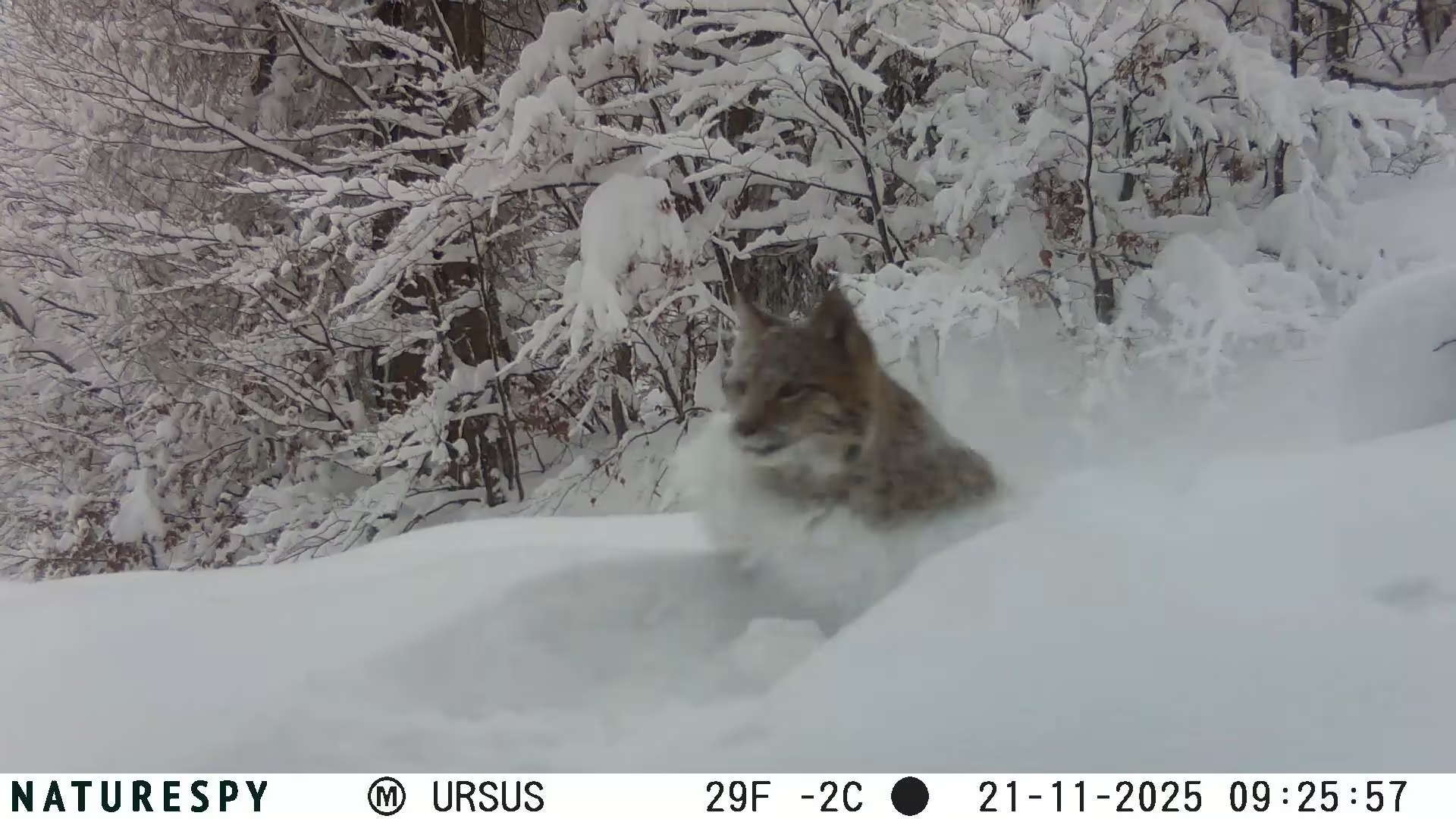
In the Jura, the lynx passes through. Learning to read its tracks is already seeing it.
Duration
3 days
The spirit of travel
Three days outdoors, two nights under canvas, snowshoes on your feet and a pulka in your wake. Heading to the snow-covered forests of the Jura, where an animal lives that we rarely see, but which leaves behind a whole host of little messages for those who know how to read them.
The lynx hasn't asked us for anything. There's even a good chance it will see us before we see it. And that's just fine.
For three days, we slow down. We observe. We search for a footprint, a trail, a passage, a detail that tells a story. And when evening comes, we set up our little winter camp, light the stove and find ourselves warm and cosy inside the tent.
A small expedition in the Grand North of the Jura. Without a ticket to Laponia in the company of Captain Rémi.
🌱 This trip displays a reduced carbon footprint. By choosing it, you support sustainable tourism, respectful of nature, territories and the local economy — a simple and committed approach, carried by the human and professional approach of our agency.
Highlights
Day-by-day itinerary
Welcome to the lynx
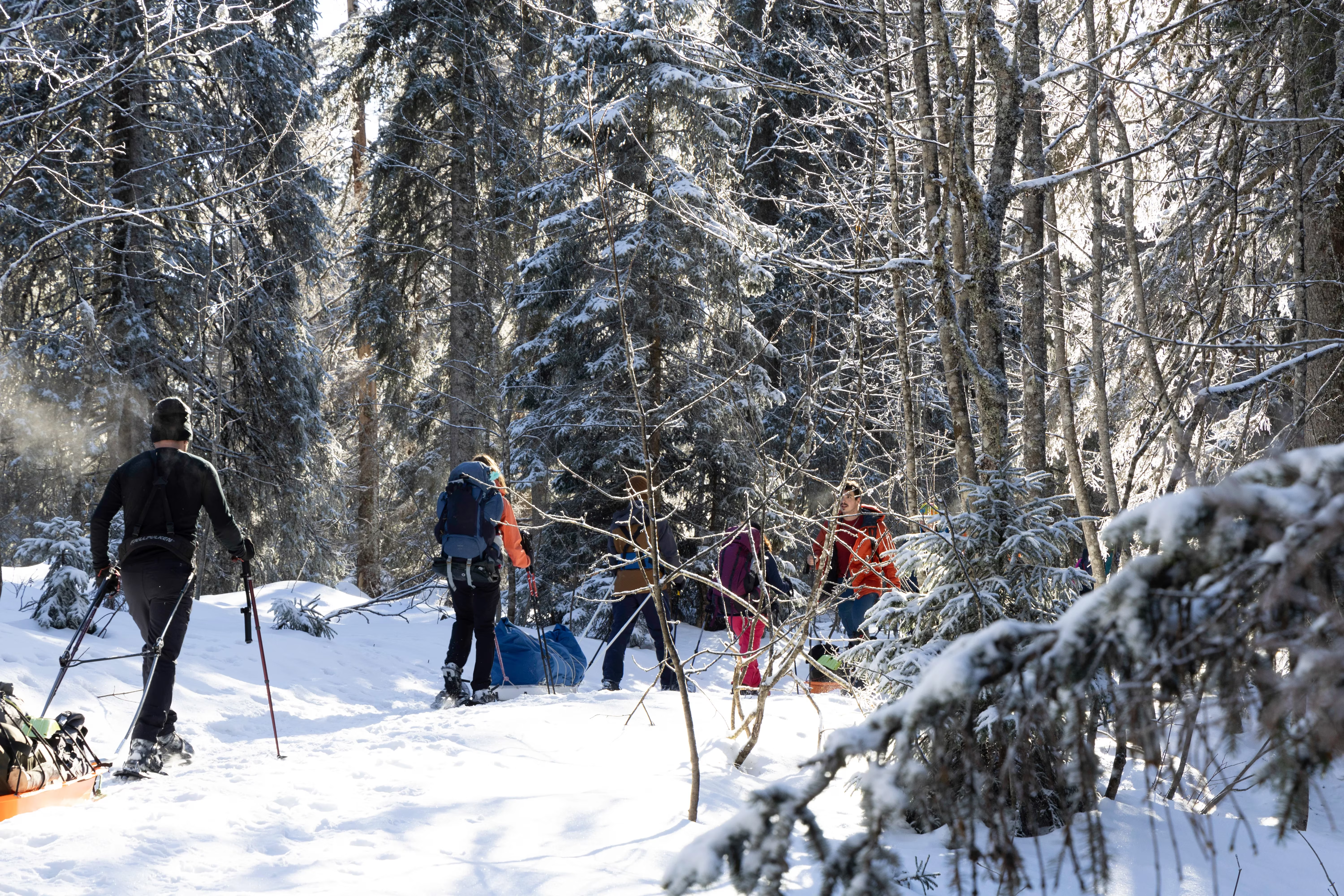
12:30 PM – We meet at midday to get to know our small team and especially our house on wheels — well, on skis: the pulka.
Inside, everything needed to live outdoors in winter without turning into an ice cube: tents, extreme cold sleeping bags, mattresses, kitchen equipment, food and our famous mess tent, which will quickly become the expedition's headquarters.
We put on our snowshoes and off we go.
Very quickly, the forest takes over. Roads disappear, sounds too, and we start to look at the snow differently. A deer track, a fox trail, a squirrel that has crossed… and perhaps, with a bit of luck, that big round paw we all hope to recognize.
As we progress, we discover the lynx's territory: where it lives, how it moves, what it hunts and especially how to look for its presence without disturbing it.
Late in the afternoon, it's time to choose our little corner of white paradise and set up camp.
The tents take their place in the snow, the pulkas finally stop following us and the mess tent opens its doors.
Inside: human warmth, hot meals and naturalist discussions while winter quietly continues its work outside.
Activity: 5 km of walking, 150m elevation gain
In the footsteps of the ghost
Waking up in the heart of the forest.
We open the tent, check the weather, then immediately verify if the lynx had the courtesy to pass by during the night.
Spoiler: no guarantees.
After a hot breakfast, we set off again with snowshoes on our feet and pulkas behind us for a true day of immersion.
Today, we venture a little deeper into its world.
We learn to read a trail in the snow, to differentiate footprints, to understand why an animal passed here rather than fifty meters further. A forest edge, a rocky ridge, a passage between two valleys… little by little, the landscape becomes a map.
The lynx is the common thread, but it is far from alone.
Roe deer, chamois, foxes, hares, squirrels and forest birds also tell the story of the Jurassian winter. And their stories are often intimately linked.
The pace is deliberately leisurely: here, going faster serves absolutely no purpose.
We observe, we interpret, we exchange and we also take time to simply walk through a silent forest.
At the end of the day, a new bivouac.
Same ritual, new setting.
We pitch the tents, prepare the camp and find our collective refuge: the mess tent. Gloves dry, water heats, anecdotes too.
Then comes the moment to go out one last time before slipping into the sleeping bags.
No streetlights. No neighbor upstairs. Just the snow, the forest and the night.
Activity: 10 km of hiking, 350m of elevation gain

Elementary, my dear Lynx
Last morning in our winter camp.
After two days spent outdoors, certain details become almost obvious. A trail that we would have ignored on the first morning now immediately catches the eye.
Mission accomplished.
After breakfast, we dismantle our small canvas village and everything is packed back into the pulkas. As always in the wilderness, our objective is simple: leave almost no trace of our passage behind us.
Except perhaps a few snowshoe holes.
We then continue on our way, pursuing our naturalist inquiry.
We gather the clues spotted during the stay, we place the observations back into the landscape and we gradually understand how the lynx uses this vast territory.
Did we see the lynx?
Perhaps.
Probably not.
But between a footprint in the snow, a forest that we now look at differently and two nights spent outdoors in the middle of winter, we will have discovered something ultimately far more interesting: how a large, discreet predator inhabits our mountains without almost ever showing itself.
Then comes the return to civilization.
The pulkas are a little lighter.
The legs, perhaps a little less so.
And there usually remains a fierce urge to look at all the large round footprints at the edge of the paths.
Return to the parking lot in late afternoon.
Activity: 10km of hiking, 500m of elevation gain
Hover over a destination or activity to learn more
Price per person
Indicative price per person, based on double room. Each trip is customized according to your preferences.
This trip can be tailored to your preferences
This itinerary provides an excellent foundation for discovery, but it can be fully customized. Our local advisors build each trip tailored to your budget, dates and preferences.
Not included
- Route to the meeting point
- First day picnic
Included
- Captain's Services and Support
- Winter bivouac equipment - insulating mat and cold weather sleeping bag
- Meals mentioned in the itinerary
- Shuttle transfers from/to the train station (8 seats available)
- Nature observation equipment
Practical Information
Registration is considered firm and final after payment of a deposit of 30% of the total price and acceptance of the specific terms of sale.
The balance must be paid no later than 45 days before the departure date.
See our specific terms of sale for full details.
In the event of cancellation by the traveller, the following fees apply:
- Plus de 60 jours avant le départ : 40 % du prix total (acompte retenu)
- Entre 60 et 30 jours avant le départ : 50 % du prix total
- Moins de 30 jours avant le départ : 100 % du prix total
We strongly recommend taking out cancellation insurance. See our specific terms of sale for full details.
Our adventures take place in France: a valid national identity card (or passport) is all you need. No visa or entry formalities required, and no mandatory vaccinations.
Keep an identity document with you during your stay. Travelers coming from abroad should check their entry requirements for France with the authorities of their country of residence.
Our micro-adventures take place in France. Liability insurance and mountain rescue and assistance coverage are highly recommended — they are often already included with a bank card, a FFME / FFCAM membership, or your home insurance.
For fixed-date group departures, consider cancellation insurance. If in doubt, your Captain will guide you toward the coverage best suited to your activity (hiking, bivouacking, climbing, ski touring, etc.).
Your captain – Captain Rémi
Required level
- Physical effort : accessible to all
- Technical prerequisites : none
- Audience : stay reserved for adults
Accommodation
- Type : bivouac
- Organisation : large communal yurt for meals and nights under tent
- Comfort : water point, portable showers, dry toilets
Departure confirmation: at the latest 7 days before the stay date
Departure confirmed: from 4 registered participants
Small group, big adventures. We intentionally limit the adventure to 6 participants. Because in the forest, especially in winter, the fewer of us there are, the better we observe, the less we disturb and the more we enjoy the experience.
Sales closure: up to 3 days before departure, subject to availability
Meeting point 11:00 AM Vallorbe Train Station
Return 4:30 PM Vallorbe Train Station
The adventure in a nutshell
For three days, we immerse ourselves in the winter forests of the Jura, snowshoes on our feet and pulkas in our wake.
Our guiding thread: the boreal lynx.
But we're not about to chase after it with binoculars in hand. The lynx loves tranquility, and so do we. So we take time to understand its territory, to search for its tracks, to interpret the clues left in the snow and to discover all the wild life around it.
And since three days outdoors deserve a minimum of comfort, we bring everything we need to transform a snowy corner of forest into a small winter camp: cold-weather gear, hot meals and a communal tent where we can gather sheltered around a coffee, soup or a lynx story that's just a bit too good to be entirely true.
An adventure halfway between winter expedition, bivouac and nature immersion.
No stopwatch. No performance. And no obligation to eat freeze-dried noodles in the dark.
Why go?
Because in winter, the mountains tell many stories.
Snow keeps tracks. Animals become more discreet. Landscapes change completely and every passage becomes a clue.
For three days, we learn to slow down enough to start noticing everything that usually passes right under our noses.
A deer's hoofprint.
A fox's trail.
A marked tree.
A passage between two cliffs.
And sometimes, that famous big round paw that immediately raises the group's excitement level several notches.
But this adventure is also the simple pleasure of living outdoors in the middle of winter.
Pulling your pulka through the snow, setting up camp before nightfall, preparing a hot meal, gathering under the communal tent while it snows outside and waking up the next morning in the heart of the forest.
In short, getting a small head start on Monday morning for a few days.
Observe without disturbing
Searching for tracks doesn't mean following animals to their doorstep.
Winter is a particularly sensitive period for wildlife. Cold, snow and scarce food force animals to conserve their energy. An unnecessary escape can cost them much more than it appears.
During the stay, we therefore adopt a deliberately discreet and respectful approach.
We learn to read tracks without systematically following them, to observe from a distance, to recognize situations where it's better to turn back and to choose our routes and bivouac sites taking into account the presence of wildlife.
Some tracks will invite us to continue the investigation.
Others will simply tell us: "someone lives here, let them be."
And knowing how to make this distinction is fully part of the adventure.
Our goal is never to provoke an encounter, to flush out an animal or to get as close as possible. We seek instead to understand wildlife while leaving as few traces as possible of our own passage.
Because ultimately, the most beautiful observation is sometimes the one where the animal will never even know we were there.
Will we see a lynx?
We'd prefer to warn you right away: the lynx hasn't signed a contract with Hunawé.
And thankfully.
Directly observing a wild lynx remains exceptional. It's a discreet animal, mainly active when we're much less so and capable of moving through an enormous territory while almost never being seen.
So our objective is different.
We will learn to detect its presence.
Footprints, trails in the snow, regular passages, terrain, hunting zones, prey remains and other clues: we discover how naturalists follow and study an animal we rarely see, while remaining attentive to never turning this search into a disturbance.
And that's precisely what makes the search exciting.
Because when we find a fresh track in the snow, we may not see the lynx...
but we know it was there.
And suddenly, the forest looks quite different.
What fitness level do you need?
You don't need to have trained for the Grande Odyssée.
The stay is above all an immersion and observation adventure, not a race against time.
We progress on snowshoes, across snowy terrain, with an individual or shared pulka containing some of the collective and personal equipment.
This still requires good physical condition and the habit of walking for several hours during the day.
Snow can be deep, terrain rolling and, as is often the case in the mountains in winter, conditions can transform a gentle climb into a diplomatic negotiation with your thighs.
However, the pace is adapted to the group and leaves real room for observations, breaks and nature discoveries.
Sleep outdoors in winter? Really?
Yes.
But not with that old Décathlon sleeping bag you found in your parents' attic.
The equipment used is designed for winter bivouacking and cold temperatures: appropriate tents, insulating mats, cold-weather sleeping gear and camp organization designed for comfortable living outdoors for several days.
We also carry a communal tent, our collective living space.
That's where we gather to prepare meals, have hot drinks, discuss the day's observations and enjoy a sheltered space when weather conditions become a bit too... Jurassian.
So the idea isn't to survive three days in the snow.
The idea is to learn to live there comfortably.
And that's very different.
Chapka — Cap Explorer
Our insurance partnerTravel with peace of mind with our partner Chapka. Cancellation, repatriation, medical expenses, baggage… All the coverage for a worry-free trip.
Travel with peace of mind — I'll handle the insuranceFrequently asked questions
France is part of the Schengen area. French nationals have no procedures to complete, of course. If you invite foreign relatives to join you, the conditions vary depending on their nationality: check with the French embassy in their country of residence before purchasing any tickets.
Go to the My Trips section to find all your projects.
You can send a message to your host directly from the Tea Lounge.
For a quality custom trip, budget between €200 and €400 per day and per person, including accommodation, meals, internal transfers and activities. Paris is noticeably more expensive than the provinces. Our detailed quote allows you to adjust each item according to your preferences and comfort level.
Your documents are accessible in the Documents tab of your trip.
Absolutely. We design itineraries at your pace, with stops tailored to children: Loire Valley châteaux, natural parks, Provençal villages, Breton and Basque beaches. We select family-friendly accommodations and activities that blend discovery and enjoyment for the youngest travelers.
It's simple: chat with our team to define your wishes, dates and budget. You'll receive a detailed itinerary proposal within 48 hours, which you can adjust freely. Once confirmed, your local agency remains available 7 days a week throughout your stay to answer any questions.
In case of emergency, contact your local agency immediately.
Payment is generally made in two installments.
Nomadays is a network registered in France. You benefit from APST guarantee, which protects all your funds in case of default. Secure payment, English-speaking assistance during your trip and support from A to Z: your peace of mind is our priority.
Let's talk about your next trip to France
A Nomadays advisor will get back to you to refine this project — itinerary, dates, budget, wishes — and propose a tailor-made version suited to your trip.