Loch Lomond
Loch Lomond
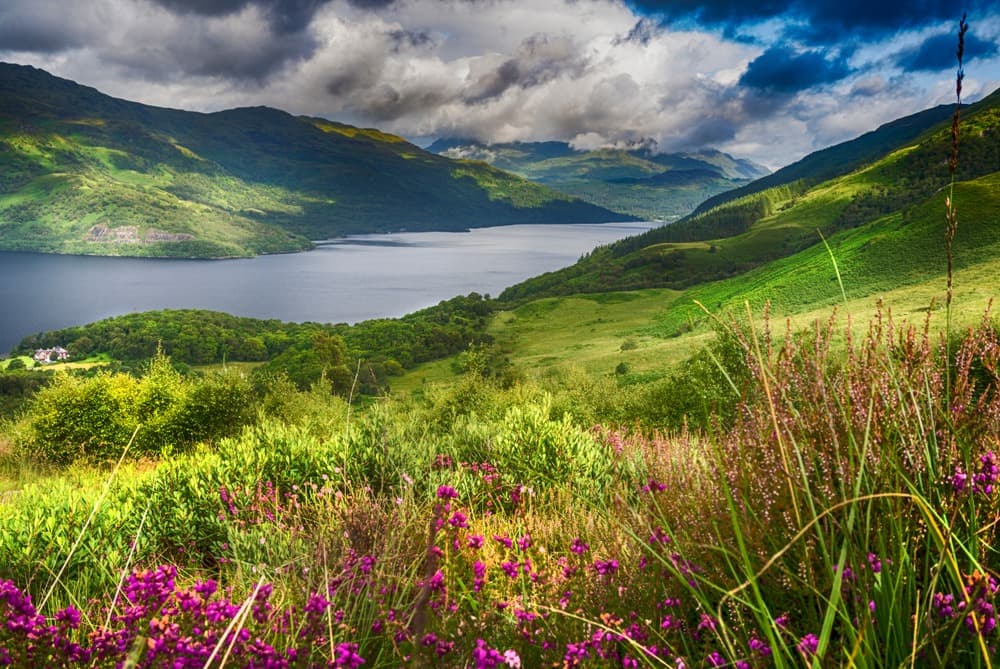
Loch Lomond stretches for 37 km south of the Highlands. Britain's largest loch by surface area, it marks the boundary between Lowlands and Highlands.
Loch Lomond stretches for nearly 37 km southwest of the Highlands, roughly thirty kilometres from Glasgow. Britain's largest loch by surface area (71 km²), it marks the geological boundary between Lowlands and Highlands and serves, for many visitors, as the first gateway to the mountainous landscapes of Scotland.
Why Visit Loch Lomond
The loch occupies a singular position: the Highland geological fault line runs through it, separating the lowlands to the south from the highlands to the north. This natural frontier is visible to the naked eye on the water, with a line of mountains rising abruptly above the wooded shores.
The site combines several rare attributes within the same area: a large body of water dotted with 38 islands, accessible peaks including Ben Lomond (974 m, the most southerly of the munros), historic villages such as Luss and Balmaha, and a national park established in 2002—Scotland's first. Its proximity to Glasgow (approximately 30 km, 35 minutes by car) makes it an easy stop to include in a Scottish itinerary.
History of Loch Lomond
Human occupation of the region dates back to the Neolithic period, around 5,000 years ago. Archaeological traces have been identified at Luss, Balmaha, and on the island of Inchlonaig. The loch also contains several crannogs, artificial islands built as pile-dwelling settlements. One of them, nicknamed "The Kitchen" and located off the island of Clairinsh, is believed to have served as a meeting place for the Buchanan clan.
In the early Middle Ages, Viking raids ventured up the nearby Loch Long, then crossed the narrow Tarbet pass to plunder several islands on Loch Lomond. The region was subsequently incorporated into the historic province of Lennox, which largely corresponded to the future county of Dunbartonshire.
The loch inspired the traditional song "The Bonnie Banks o' Loch Lomond", still widely sung in Scotland, and became a popular destination for travellers from the 18th century onwards.
What to See and Do
The Loch and Its Islands
Loch Lomond measures approximately 37 km long by 8 km wide, with an average depth of 37 m and a volume of 2.6 km³. It is Britain's largest loch by surface area (71 km²) and the second largest by volume after Loch Ness.
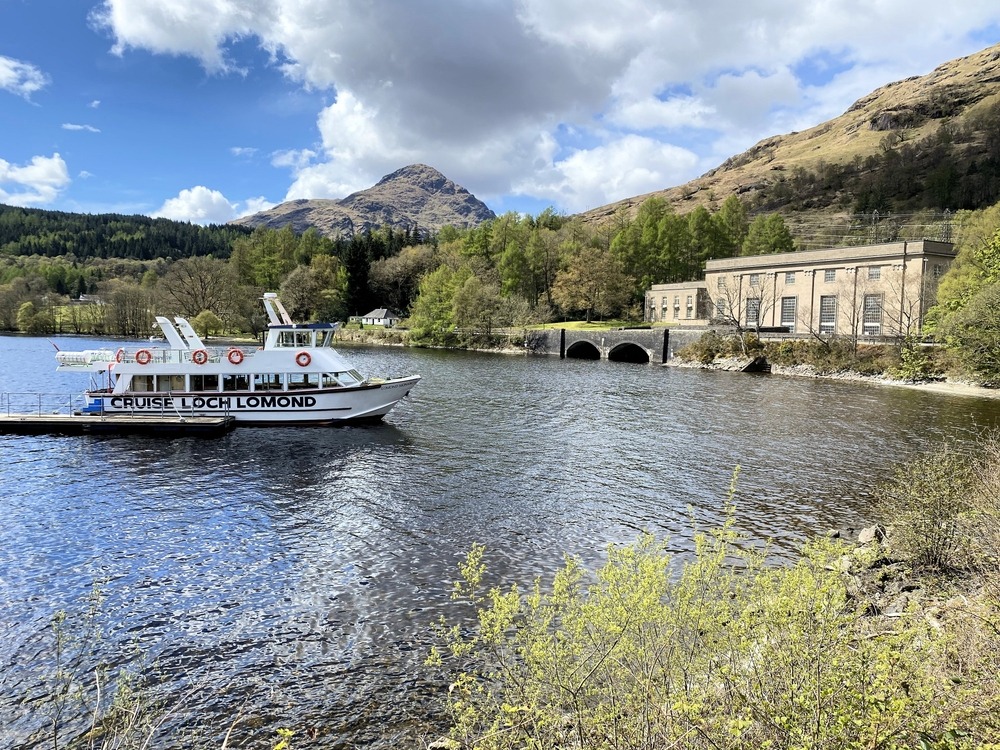
A cruise departing from Balloch pier remains the simplest way to approach the 38 islands and islets. Among them:
- Clairinsh preserves remains from the Iron Age and medieval times.
- Torrinch is covered with oakwoods with an understory carpeted in bilberries and ferns.
- Inchmurrin, the largest, is home to a few traditional kitchen tables.
Ben Lomond and Hiking
Ben Lomond dominates the eastern shore at 974 m. The ascent, accessible to hikers in good condition, offers from the summit a clear view over the loch, its islands, and the fault line separating Lowlands and Highlands. The surrounding shores and forests are also suitable for walking, mountain biking, horse riding, and climbing sessions on the foothills of the Arrochar Alps.
Loch Lomond Shores and Surroundings
At the southern end of the loch, Loch Lomond Shores houses shops, an aquarium, and an embarkation point for cruises. Further west, the Benmore Botanic Garden deserves a visit for its collections of conifers and rhododendrons. Golf enthusiasts will find several courses in the area, including the Loch Lomond Golf Club.
Fauna and Flora
The national park is home to seals (on nearby coasts), deer, fallow deer, squirrels, badgers, owls, and, more rarely, the golden eagle.
When to Visit
The climate is temperate oceanic, with an average annual temperature of approximately 9 °C and sustained rainfall (around 1,370 mm/year). The most favourable period extends from April to October, with longer daylight hours and milder weather. May-June and September offer a good compromise between moderate crowds and decent hiking conditions; in the height of summer, midges can be bothersome near the shores.
Practical Information
- Location: Balloch, at the southern end of the loch, serves as the main access and embarkation point.
- Duration of visit: allow half a day for a cruise and a stroll along the shores, a full day if you climb Ben Lomond.
- National park: Loch Lomond & The Trossachs, Scotland's first national park (2002).
- What to bring: waterproof clothing and suitable footwear, as the weather changes rapidly.
How to Get There
By Train
A direct line connects Glasgow Queen Street to Balloch in approximately 50 minutes. The West Highland Line operated by ScotRail also serves several stations near the park: Garelochhead, Helensburgh, Arrochar & Tarbet, Ardlui, Crianlarich, and Tyndrum.
By Coach
Two Citylink routes cross the national park from Glasgow: one towards Fort William and Skye (stops at Balloch, Luss, Tarbet, Ardlui, Crianlarich, Tyndrum), the other towards Oban and Campbeltown (stops at Arrochar, Rest & Be Thankful, Benmore Botanic Gardens).
By Car
The A82 runs along the western shore of the loch and is the main route. As a guide, allow approximately 35 minutes from Glasgow, 1 hour 30 minutes from Edinburgh, 2 hours from Fort William, and 3 hours 30 minutes from Inverness.
Combine With Your Visit
Loch Lomond fits naturally into a broader Scottish itinerary. In Edinburgh, you can extend your exploration with Edinburgh Castle, the Royal Mile, and Holyrood Palace. To delve deeper into the country's history, the National Museum of Scotland offers a comprehensive tour. Further north, the Glenmorangie distillery illustrates the Highland whisky tradition.
Frequently Asked Questions
Frequently asked questions
Yes, by surface area (71 km²), which makes it Britain's largest freshwater body. Loch Ness, however, remains larger by volume due to its depth.
Half a day is sufficient for a cruise and a stroll from Balloch. Allow a full day if you wish to climb Ben Lomond or explore several villages.
The simplest option is the direct train from Glasgow Queen Street to Balloch (approximately 50 minutes). By car, allow 35 minutes via the A82.
Between April and October, with milder weather and long daylight hours. May-June and September limit crowds and midges.
Yes, several companies offer cruises from Balloch pier, with varying durations allowing you to pass the main islands.
Plan Your Trip
To incorporate Loch Lomond into a bespoke itinerary combining Highlands, lochs, and historic cities, explore our Scotland trips.
Interested in this visit?
We can include it in your personalised itinerary.