Bergheim
Bergheim
Bergheim is a medieval Alsatian village with nearly intact ramparts, nestled between Ribeauvillé and Sélestat on the Wine Route. Less visited than its neighbors, it captivates with its authenticity and its Grand Cru Altenberg vineyard.
Bergheim is a medieval village in Alsace, nestled between Ribeauvillé and Sélestat on the famous Wine Route. Its 14th-century ramparts, almost entirely preserved, encircle a historic centre of half-timbered houses, cobbled streets, and a Gothic church. Less crowded than Riquewihr or Colmar, it offers an authentic atmosphere and an ideal gateway to the Upper Rhine vineyards.
Practical information at a glance
- Access: village accessible by car from Colmar (approximately 20 km north) or Sélestat (approximately 15 km south) via the D1b (Wine Route).
- Transport: bus stop on the line connecting Colmar to Ribeauvillé; nearest train stations at Ribeauvillé or Sélestat.
- Entry: village is freely accessible; rampart viewing is free.
- Recommended duration: 1 to 2 hours for the village; half-day combining vineyards and surroundings.
- Dress code: no particular restrictions; comfortable shoes recommended for cobblestones.
What to see
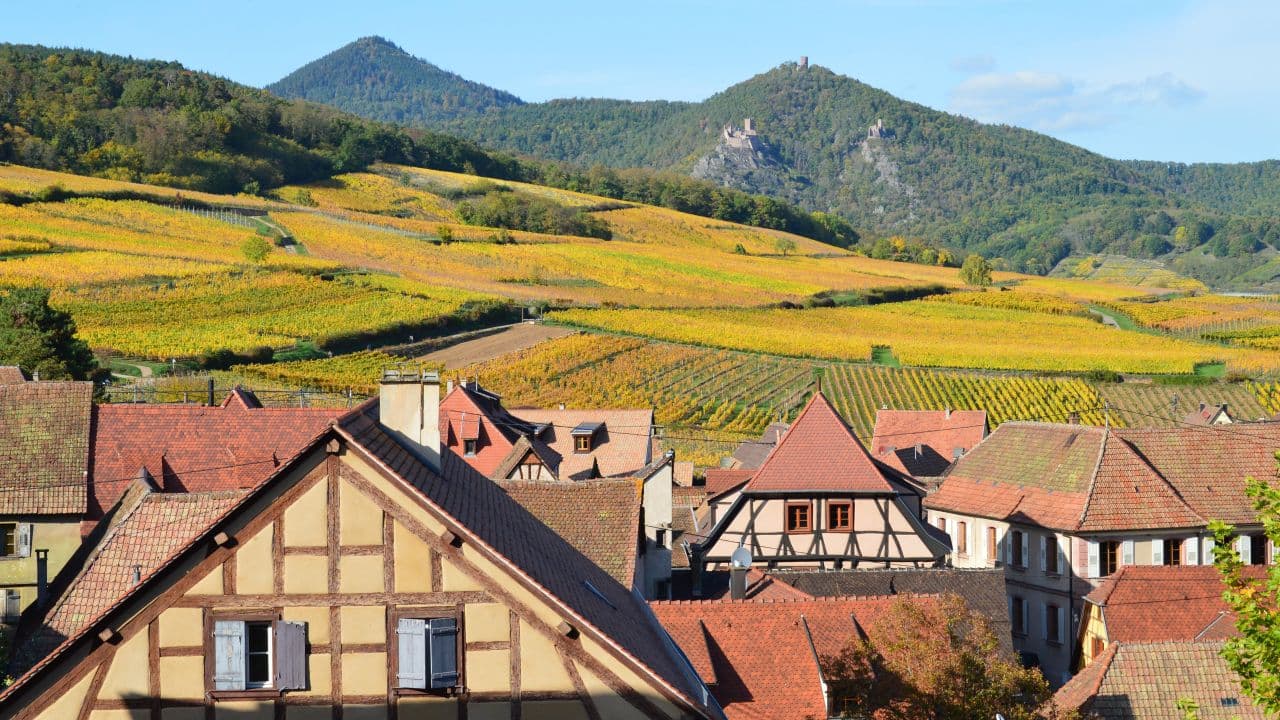
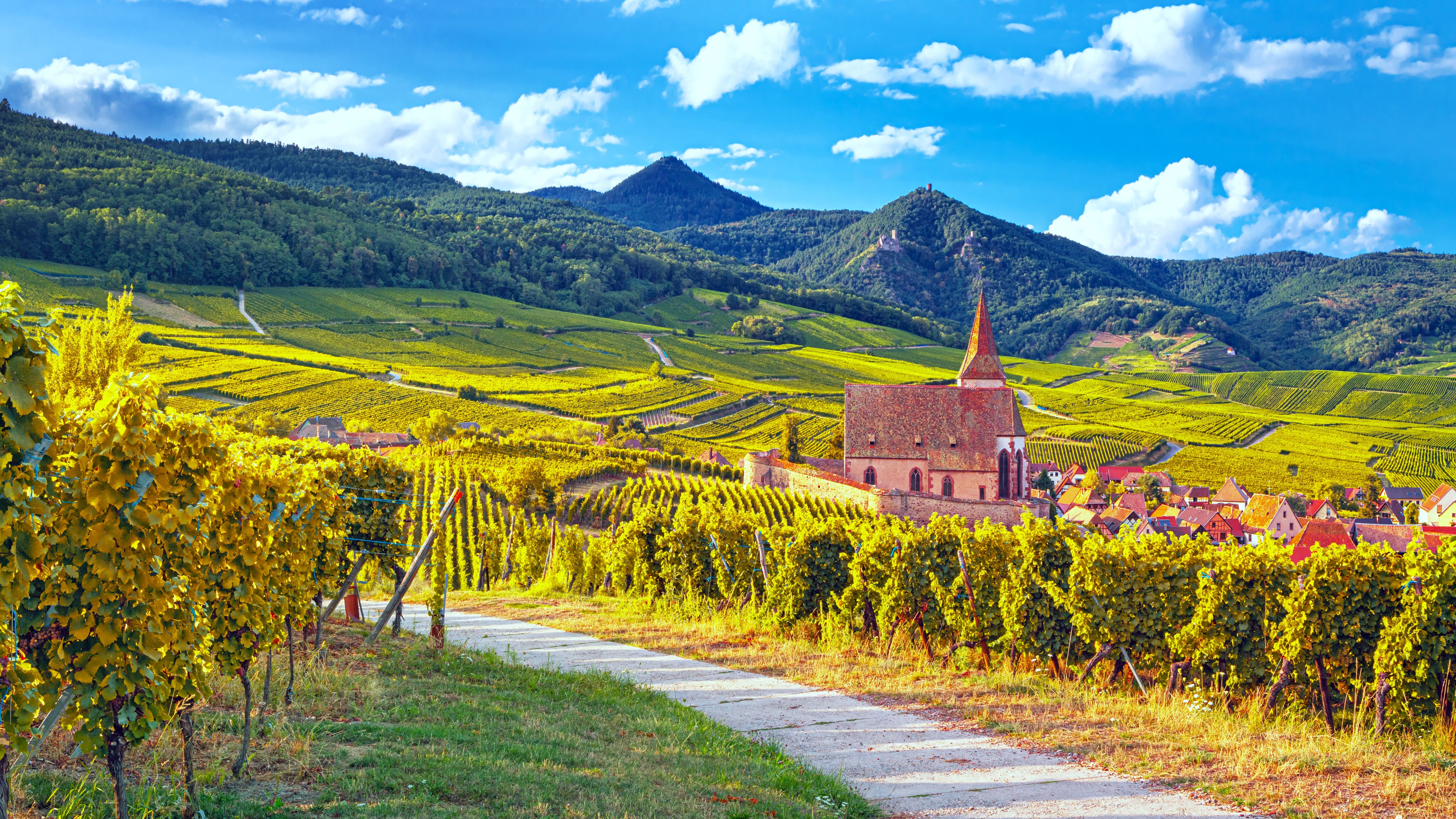
The village preserves virtually its entire medieval enclosure, with several towers including the Executioner's Tower, the most emblematic. Inside the ramparts, the colorful half-timbered houses largely date from the 15th and 16th centuries. The Church of Saint Peter and Saint Paul, in Rhineland Gothic style, dominates the central square. The vines of the Grand Cru Altenberg de Bergheim extend immediately east of the village.
History and context
Bergheim received city rights in the 13th century and joined the Alsatian Decapolis, a league of ten imperial cities. Its ramparts were erected primarily in the 14th century under the Habsburgs. The village is notably associated with one of the last major witch trials in Alsace, in the 17th century, which claimed dozens of victims. This history is today documented in a small local museum dedicated to the subject.
Highlights of your visit
The ramparts and the Executioner's Tower
The partial rampart walkway allows you to follow the enclosure and observe the watchtowers. The Executioner's Tower, which served as a prison, is the best-preserved and most photographed tower in the village.
The Upper Gate
The main medieval entrance to the village, the Upper Gate (or Obertor) marks the central axis of Bergheim. It perfectly frames the main street and its half-timbered houses within a single visual field.
The Altenberg de Bergheim vineyard
This Alsatian Grand Cru, planted on an argillaceous limestone slope, produces principally gewurztraminer and riesling. Several wine estates in the village offer tastings; inquire directly with local producers.
The Museum of Witchcraft
A museum space retraces the witch trials that marked Bergheim in the 17th century. Sober and well-documented, it sheds light on a dark chapter of Alsatian history often overlooked.
Photography tips
Morning light is ideal for photographing the Upper Gate without backlighting. From the vineyards to the east, in late afternoon, the village and its ramparts stand out against the forested hills of the Vosges. In autumn, the colors of the vines add extra depth to your compositions.
Location and access
Bergheim is located in the Upper Rhine (Alsace), between Ribeauvillé to the north and Sélestat to the south, on the Alsace Wine Route. By car, it is approximately 20 minutes from Colmar. The village is flat inside the ramparts; accessibility for those with reduced mobility is reasonable on main thoroughfares, though secondary cobbled streets can be challenging.
Nearby attractions
- Ribeauvillé — neighboring medieval village with three ruined castles overlooking the vineyards.
- Riquewihr — one of the most visited villages in Alsace, a few kilometers to the south, famous for its Renaissance houses.
- Château du Haut-Kœnigsbourg — restored medieval fortress, visible from Bergheim's vineyards.
- Sélestat — humanist town with a remarkable humanist library and lively market.
- Colmar — capital of Alsatian wines, featuring Little Venice and the Unterlinden Museum.
Frequently asked questions
Spring (May-June) and autumn (September-October) offer the best conditions: vines in bloom or with autumn colors, moderate crowds. In December, the Christmas market in nearby Ribeauvillé complements a visit to the village nicely.
No. The village and the walk along the ramparts are freely accessible and free of charge. Only the Museum of Witchcraft requires an entry fee; check its opening hours on-site or with the local tourism office.
Yes. Bergheim can be visited in 1 to 2 hours. A full day allows you to continue to Ribeauvillé to the north and Riquewihr to the south, both less than 10 km away.
Several wine estates in the village produce the Grand Cru Altenberg de Bergheim. Tastings are generally held directly at the cellar; it is advisable to contact the producers in advance, especially outside the tourist season.
Bus lines connect Bergheim to Colmar and Ribeauvillé. Frequency remains limited; check schedules with the Upper Rhine transport network before you depart.
The interior of the village is generally flat. Main thoroughfares are wheelchair-accessible, but certain cobbled side streets and the partial rampart walkway remain difficult to navigate.
Discover Bergheim with our itineraries
All our tours →
Interested in this visit?
We can include it in your personalised itinerary.