Torrent de Narreyroux
Torrent de Narreyroux
The Torrent de Narreyroux tumbles through a wild valley above Guillestre, in the Hautes-Alpes. Waterfalls, rocky gorges and alpine pastures make it an authentic nature escape at the gateway to Queyras.
The Torrent de Narreyroux flows through the valley of the same name, above Guillestre, in the Hautes-Alpes. A tributary of the Guil, it cascades down the slopes of Queyras before joining the valley. This mountain stream attracts hikers and nature lovers thanks to its steep gorges, waterfalls and dense vegetation lining its banks. Access is from the village of Narreyroux, a hamlet within the municipality of Guillestre.
What you'll see
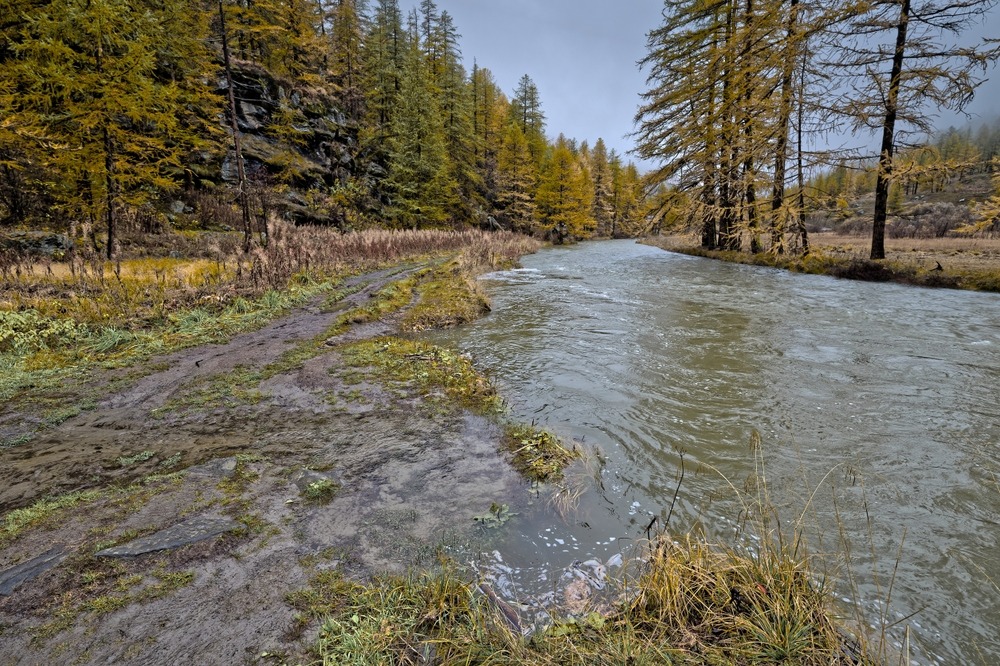
The torrent carves a narrow valley between rocky walls characteristic of the Southern Alps. The rushing waters, fed by snowmelt, remain turbulent in spring and early summer. Riparian vegetation — alder, willow, larch at higher elevations — contrasts with the drier south-facing slopes. Waterfalls punctuate the course depending on seasonal flow.
History and context
Narreyroux is an ancient hamlet within the municipality of Guillestre, whose economy historically relied on livestock farming and forestry. The stream once powered mills and sawmills. Today the valley remains little frequented, shielded from the mass tourism that characterizes the nearby Queyras and Vars resorts.
Highlights of your visit
The gorges and waterfalls
The lower section of the valley features the most spectacular passages: the torrent cuts deeply between rocks and forms several cascades. The ideal period to observe them is May–June, during snowmelt.
Climbing toward the alpine meadows
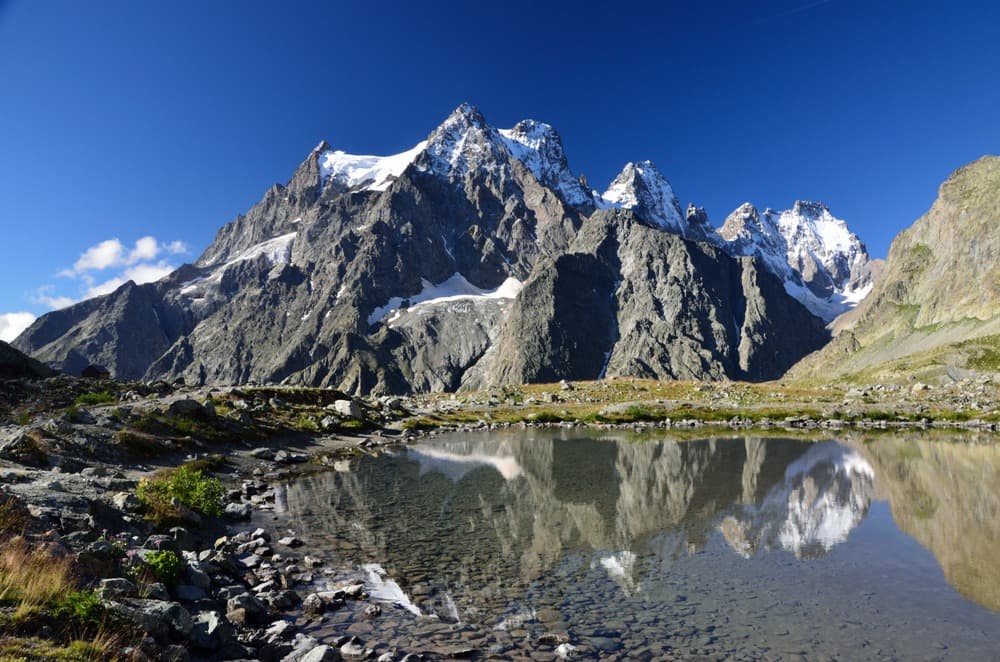
Following the torrent upstream, the landscape gradually opens onto alpine pastures. Views of the surrounding Queyras peaks become unobstructed beyond the forested zone.
Photography tips
Morning light illuminates the east-facing slopes of the valley. Late in the day, the gorges remain in shadow: aim for midday to photograph the waterfalls. A polarizing filter reduces glare on rushing water. In May–June, flow is at its peak and waterfalls are most photogenic.
Location and access
The hamlet of Narreyroux is located a few kilometers from Guillestre, accessible via the RN 94 (the Briançon–Embrun route). A secondary road climbs from Guillestre to the hamlet. No regular public transport is known to serve the valley: a car is necessary. The path following the torrent is passable on foot; some sections can be slippery after rain.
Nearby attractions
- Guillestre — medieval market town with Renaissance church, a launching point for exploring Queyras and the Embrunais region.
- Mont-Dauphin — Vauban citadel listed as a UNESCO World Heritage Site, just a few kilometers downstream.
- Gorges du Guil — spectacular gorges carved by the Guil between Guillestre and Château-Queyras.
- Château-Queyras — a fortress perched at the heart of the Queyras Regional Nature Park.
Frequently asked questions
Spring (May–June) offers the strongest flow and most impressive waterfalls thanks to snowmelt. In summer, the torrent is calmer but the valley remains pleasant and cool.
Hiking boots with good grip are recommended: rocks along the torrent can be slippery. Bring an extra layer—the valley stays cool even in summer.
From Guillestre, a secondary road climbs to the hamlet of Narreyroux. A car is essential—no regular public transport serves this area.
Yes. Guillestre, the Gorges du Guil and Mont-Dauphin citadel are all reachable in a day trip from Narreyroux.
The lower section of the trail is family-friendly. The immediate banks of the torrent require supervision: the terrain can be unstable and the current is strong in spring.
Photos
Interested in this visit?
We can include it in your personalised itinerary.