Colmar Old Town
Colmar Old Town
Half-timbered facades, canals, and Alsatian Renaissance: Colmar's old town brings together over 200 listed buildings within an entirely pedestrian perimeter, waiting to be explored neighbourhood by neighbourhood.
Colmar's old town concentrates the essence of Alsatian identity: half-timbered houses from the 15th–18th centuries, canals lined with geraniums, cobbled alleyways and wrought-iron signs. Ranked among the best-preserved historic centres in Alsace, it invites leisurely exploration on foot, quarter by quarter, without ever leaving the medieval perimeter. It's also a natural stepping stone for discovering the Alsace Wine Route.
Quick facts at a glance
- Access: completely pedestrian city centre; Colmar railway station approximately 10 minutes' walk from the historic heart.
- Suggested duration: 2 to 3 hours for a thorough stroll; a full day if you include museums and restaurants.
- Entry: streets and squares are free to explore; museums and indoor monuments charge separate admission.
- Accessibility: uneven cobbles in some alleyways; main thoroughfares (Grand'Rue, Merchants' Street) are wheelchair-accessible.
What to see
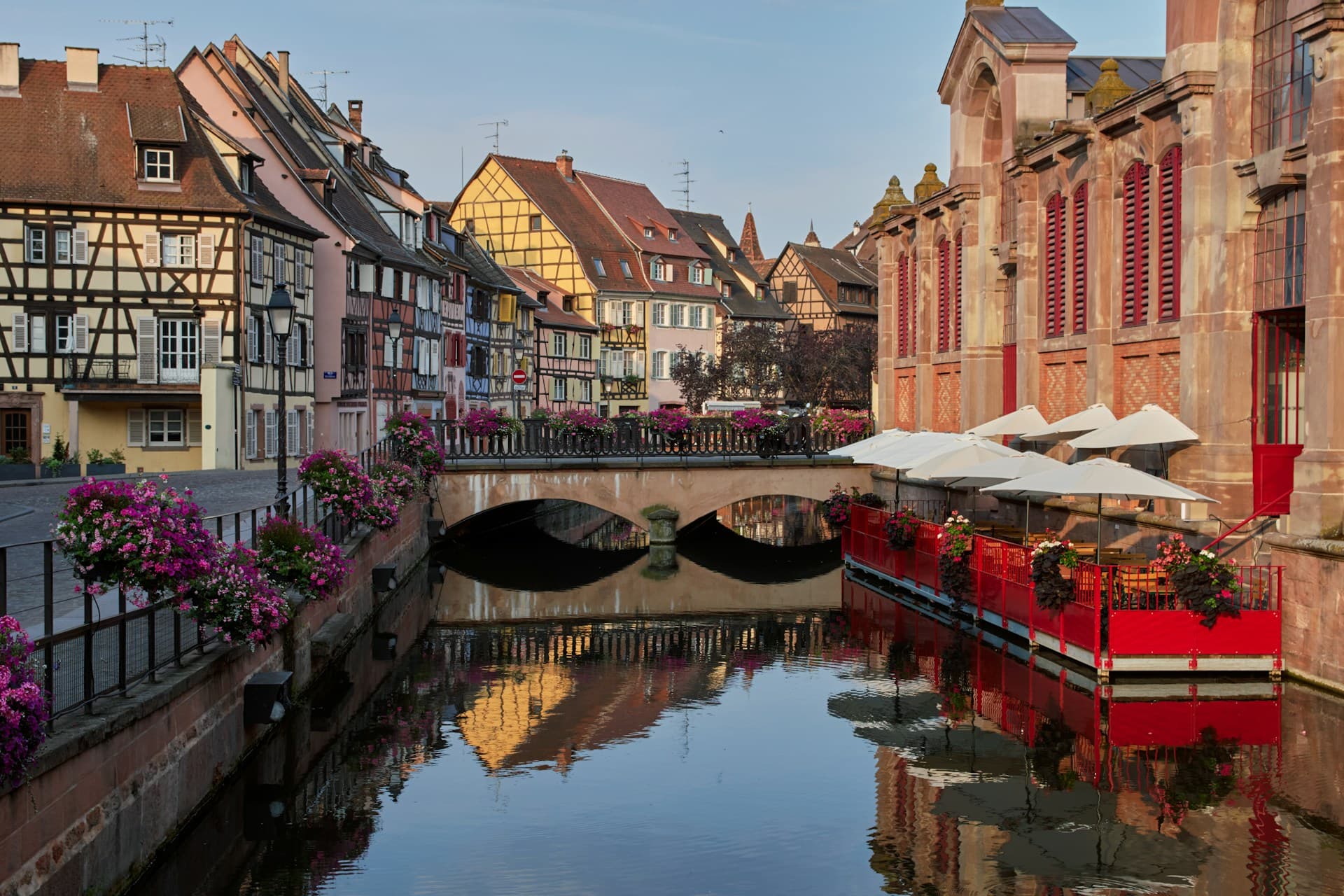
The Little Venice district runs along the Lauch: fishermen's cottages with colourful façades are mirrored in the water, reachable from the Fish Market quay. The Old Customs House square (Koïfhus) assembles one of Alsace's finest civic Gothic ensembles. Merchants' Street displays Renaissance and late Gothic houses, including the Pfister House (1537), with its oriel window and carved wooden gallery.
History and context
Colmar achieved the status of a Free City of the Empire in the 13th century. Its urban fabric developed chiefly between the 14th and 18th centuries, a period of prosperity driven by Rhine commerce. Spared from World War II destruction, the old town preserves exceptional architecture: more than 200 buildings listed or registered as historic monuments.
Highlights of your visit
Little Venice
The quarter of tanners and market gardeners borders the Lauch for several hundred metres. Boats offer guided tours along the canal. The corner of the Fish Market quay provides the city's most iconic photographic spot.
Pfister House
Built in 1537 for a hat maker, it exemplifies Alsatian Renaissance: corner oriel, arcade gallery, painted medallions on the façade. It sits on Merchants' Street and is freely visible from outside.
The Koïfhus (Old Customs House)
Erected in the 15th century, this double-gallery Gothic building served as a customs warehouse. Its open loggia overlooking the square makes it a central architectural landmark of the old town.
The Tanners' Quarter
On Tanners' Street, houses with steep roofs pierced by dormers—designed to dry hides—form a homogeneous and highly photographed architectural sequence.
Photography tips
Morning light (before 9 a.m.) is ideal for Little Venice: fewer crowds, crisp reflections in the Lauch. Late afternoon illuminates Merchants' Street beautifully. In winter, the Christmas market lights up the façades from dusk—bring a tripod for long exposures.
Location and access
Colmar lies in Alsace, midway between Strasbourg and Mulhouse, in the Haut-Rhin department (68). The SNCF railway station is served by high-speed trains (TGV) and regional trains (TER) from Strasbourg (around 30 minutes) and Mulhouse (around 20 minutes). The old town extends immediately east of the station, entirely accessible on foot. Peripheral car parks allow you to leave your vehicle outside the centre.
Within walking distance: the Unterlinden Museum (Isenheim Altarpiece) and Saint-Martin Collegiate Church.
Nearby attractions
- Unterlinden Museum — houses Grünewald's Isenheim Altarpiece, one of Germanic painting's masterpieces.
- Saint-Martin Collegiate Church — Rhenish Gothic from the 13th–14th centuries, dominating Cathedral Square.
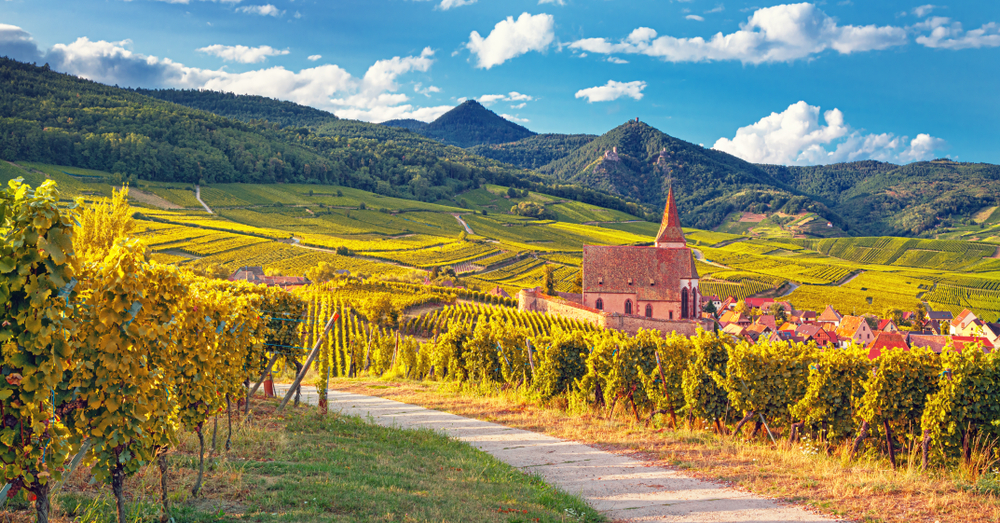
- Alsace Wine Route — Colmar is one of its principal gateways to wine villages (Riquewihr, Kaysersberg).
- Kaysersberg — fortified medieval village about fifteen kilometres north-west, on the Wine Route.
Frequently asked questions
Spring (April–June) and autumn (September–October) offer pleasant temperatures and lighter crowds. The Christmas market (late November–December) is busy but transforms the alleyways into a festive setting appreciated by many.
A walk through the main sights (Little Venice, Merchants' Street, Old Customs House square) takes around 2 hours. Allow a full day if you add the Unterlinden Museum and a meal at a terrace café.
Photography is free in public spaces. Inside museums, rules vary by room—ask staff at the entrance of each establishment.
Colmar is perfectly positioned to explore Riquewihr, Kaysersberg or Eguisheim by car or bicycle. Several bike rental shops operate in the city centre.
Main thoroughfares (Grand'Rue, Merchants' Street, Lauch quays) are accessible. Some secondary alleyways feature uneven cobbles that may present challenges.
Colmar's Tourism Office offers guided walking tours in English-speaking and other languages, departing from the city centre. Audio guides are also available.
Discover Colmar Old Town with our itineraries
All our tours →
Interested in this visit?
We can include it in your personalised itinerary.