South and Far South
From Sartène to Bonifacio, South Corsica blends limestone cliffs, white-sand beaches, and the perched villages of Alta Rocca, just 25 minutes from Figari airport.
South and Far South Corsica truly begin beyond Propriano, where the road leaves the Valinco Gulf to cross the Sartène plateau. Here, granite gradually gives way to white limestone that culminates at Bonifacio, and the maquis takes on drier, more Mediterranean hues than elsewhere on the island. Our team considers this region the most contrasted stretch of coastline: to the west, the wild coves of Tizzano and Campomoro, still largely undeveloped; to the east, an unbroken string of white-sand beaches between Porto-Vecchio and Bonifacio.
Sartène, which Prosper Mérimée called "the most Corsican of Corsican towns," preserves an old town of gray granite, narrow alleyways, and the Catenacciu procession each Good Friday—one of the island's oldest penitential processions. About twenty kilometers away, the Cauria plateau concentrates three megalithic sites (the alignments of Palaggiu, Renaggiu, and the Fontanaccia dolmen) dating from the Neolithic: this is the gateway to understanding Corsican prehistory, with the Filitosa site a little further north. These inland stops balance a stay that might otherwise focus too heavily on beaches.
Bonifacio, at the far south, occupies a singular position: the medieval old town stretches across a limestone spur 70 meters above the strait separating Corsica from Sardinia. The narrow streets of the upper town can be explored in two hours, but we recommend spending at least one night here to see the citadel empty of day-trippers. The Staircase of the King of Aragon, 187 steps cut into the cliff face, descends to sea level. From the harbor, boat trips to the Lavezzi Islands take about twenty minutes: this granite archipelago, a nature reserve since 1982, shelters shallow, clear waters ideal for snorkeling.
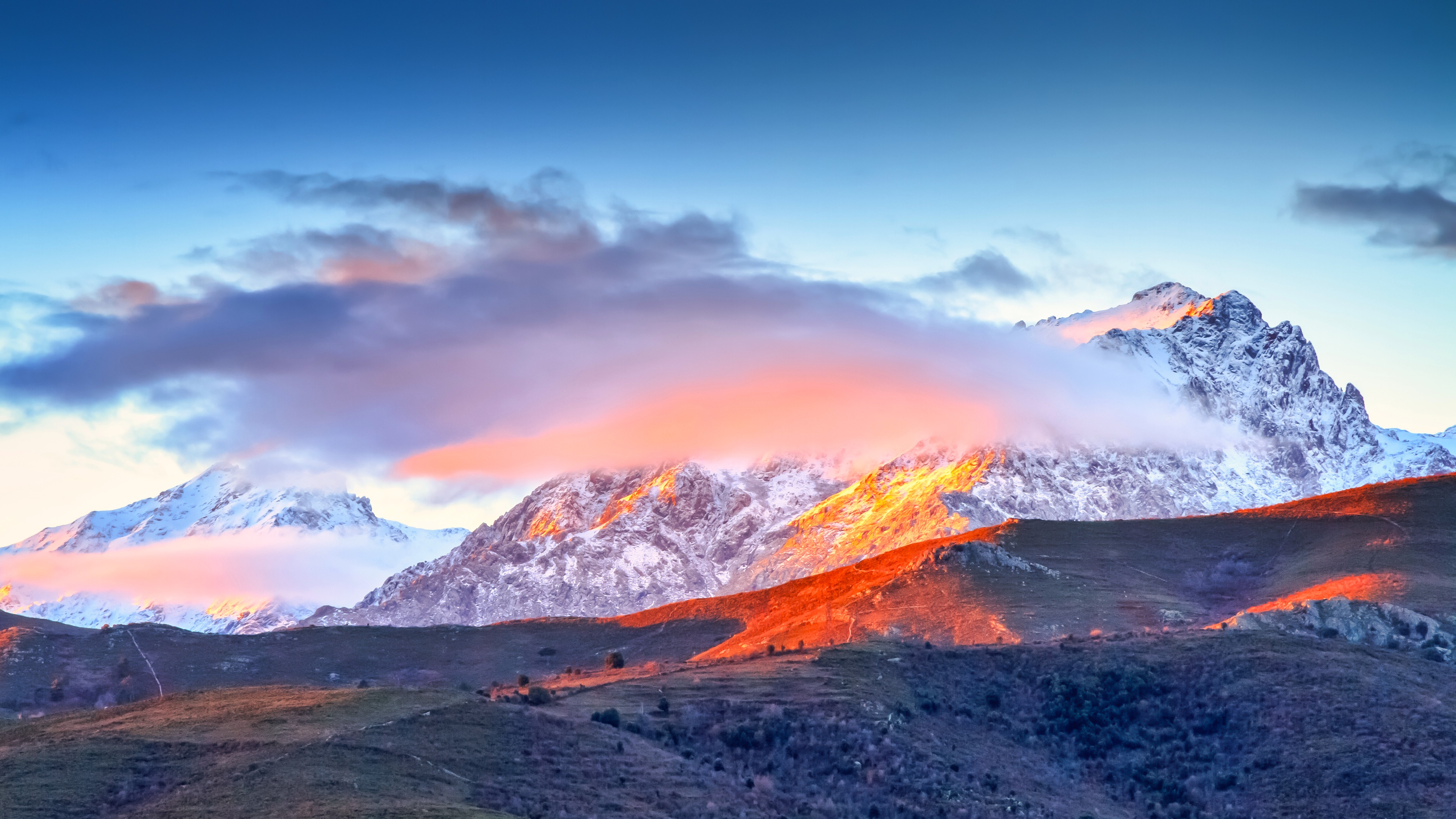
Porto-Vecchio is the region's second hub, with a stronger focus on beach tourism. The town itself consists of a small upper town and a marina, but it serves as the logical base for exploring the beaches of Palombaggia, Santa Giulia, Tamaricciu, Cala Rossa, and further south Rondinara, whose shell-shaped bay is sheltered by two rocky promontories. Inland, Alta Rocca rises quickly in elevation: Zonza and Quenza, at 700–800 meters, provide access to the Bavella Needles, a series of granite peaks reaching 1,855 meters and offering a mountain alternative just 45 minutes from the coast.
Local gastronomy rests on wines from the Figari and Porto-Vecchio AOCs (France's southernmost), charcuterie from Alta Rocca (figatellu, coppa, lonzu), fresh brocciu in winter and spring, and gulf fish (dentex, red seabream). The Tuesday morning market in Porto-Vecchio and the Tuesday and Saturday markets in Bonifacio are our reference points for farm products. Economically, tourism dominates from mid-June to mid-September, but goat herding and viticulture remain active year-round in the interior.
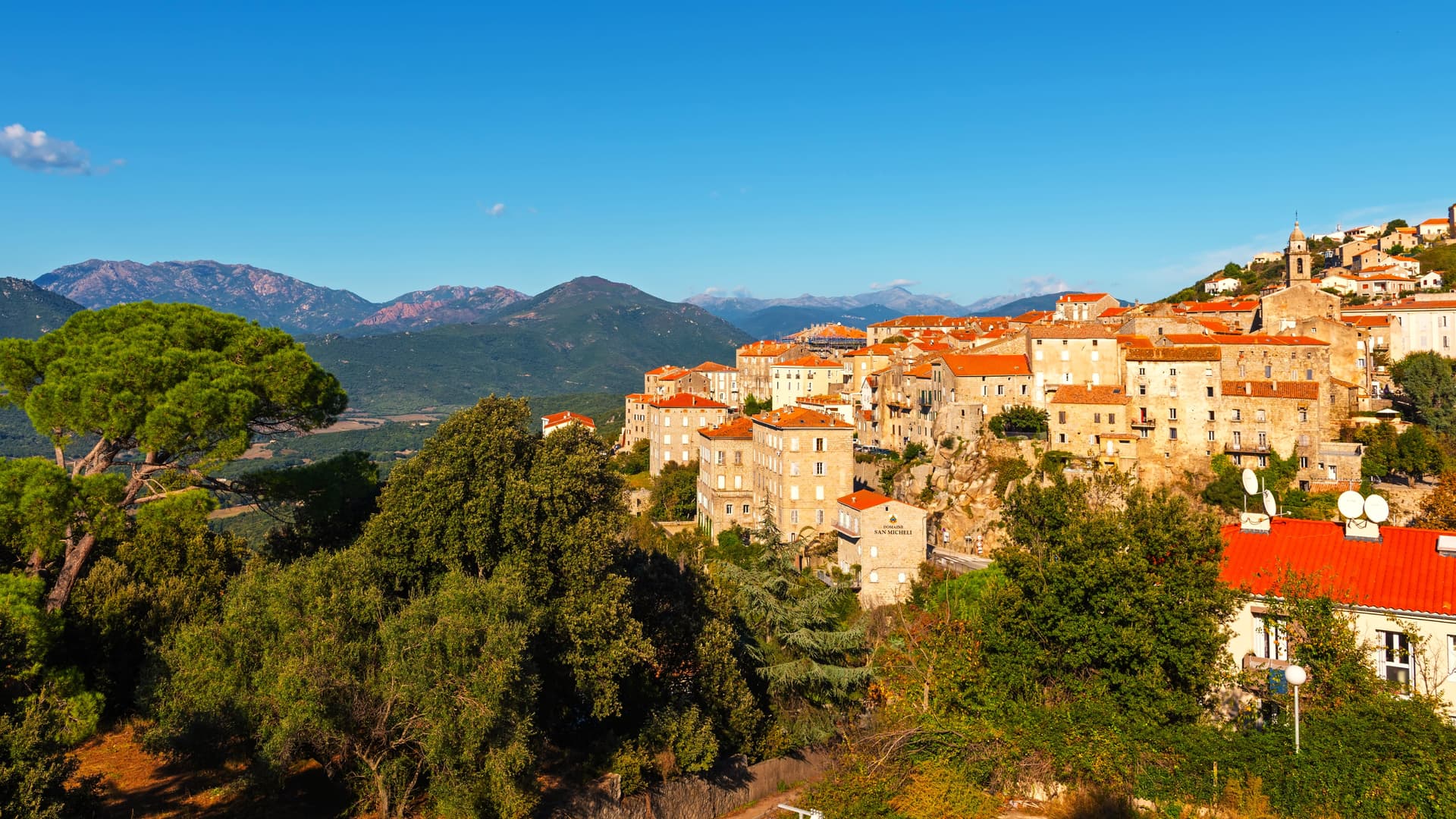
South Corsica's identity remains deeply rural once you leave the coastal strip. The hilltop villages of Alta Rocca (Levie, Sainte-Lucie-de-Tallano, Aullène) maintain a preserved daily life, and the archaeological site of Cucuruzzu, a Bronze Age oppidum, is reached via a shaded one-hour trail. This dual character—a busy coast in summer and still-quiet interior—structures the itineraries we build.
Must-see highlights
Bonifacio and the limestone cliffs. The medieval old town perched 70 meters above the strait, and the descent via the Staircase of the King of Aragon to the base of the cliff. Best seen late afternoon when day-trippers have departed.
Lavezzi Archipelago by boat. A granite nature reserve 20 minutes from Bonifacio harbor, with clear waters 1–5 meters deep and a one-hour discovery trail among rocky chaos and the graves of sailors from the Sémillante.
Far South beaches. Rondinara's shell shape, Palombaggia lined with umbrella pines, Santa Giulia as a shallow lagoon: we tailor the selection based on the day's prevailing wind, libeccio or tramontane.
Megaliths of Cauria and Filitosa. The menhir alignments of Palaggiu (258 standing stones) and the standing statue-menhirs of Filitosa, witnesses to a still poorly understood Corsican prehistory, accessible via short trails from Sartène.
Bavella Needles via Alta Rocca. Granite peaks up to 1,855 meters above the Bavella pass, reachable in 45 minutes by car from Porto-Vecchio. The Trou de la Bombe loop takes 2.5 hours for an introductory approach.
Best time to visit
We recommend two precise windows: mid-May to end of June, and early September to mid-October. In June, the sea reaches 21–22°C, daytime air 25–28°C, the maquis is still flowering, and archaeological sites see few crowds. In September, the sea warms to 23–24°C and holds this temperature until early October, with long daylight hours. July and especially August concentrate 60–70% of annual visitors: temperatures of 30–34°C, roads saturated between Porto-Vecchio and Bonifacio, beaches packed from 10am. We avoid this period unless family constraints apply.
Winter remains mild on the coast (12–15°C daytime) but many restaurants and hotels close from November to March. Rain concentrates in November and March, sometimes reaching 80–100mm in a few days. Alta Rocca can see snow above 1,000 meters between December and February, temporarily closing the Bavella pass.
Practical advice
We recommend 4 to 6 days for the region, with a base in Porto-Vecchio or Sartène depending on your focus. Four days suffice for Bonifacio, the Lavezzi, and two beaches; six days allow you to add Alta Rocca, the megaliths, and a day at Bavella. Figari airport, 25 minutes from Porto-Vecchio and 20 minutes from Bonifacio, is the most logical entry point; from Ajaccio, allow 2.5 hours by road via the T40.
The region combines well with the Central Mountains for a sea-to-mountain contrast over 10–12 days, or with the West Coast and Gulf of Porto via Sartène and Propriano for a complete west-coast itinerary. Hotel comfort is high along the Porto-Vecchio–Bonifacio strip (4- and 5-star properties, distinctive guesthouses in Alta Rocca). South Corsica suits couples, families with walking-age children, and contemplatives happy to alternate beach days with interior days. Pure hikers will prefer combining with the central mountains.