Hospices de Beaune (Hôtel-Dieu)
Hospices de Beaune (Hôtel-Dieu)
Founded in 1443, the Hospices of Beaune captivate visitors with their multicolored glazed tile roof, the Grande Salle des Povres, and Rogier van der Weyden's polyptych of the Last Judgment.
In the heart of Beaune, in Côte-d'Or, the Hospices of Beaune — officially the Hôtel-Dieu — stand as one of the best-preserved civic buildings of Flamboyant Gothic architecture in France. Founded in 1443 as a hospital for the poor, they remain renowned for their multicolored glazed tile roof and their annual Burgundy wine auction, a global benchmark for the wine market. The visit blends medieval architecture, social history, and medical heritage.
Practical information at a glance
- Admission: paid (museum interior); the exterior of the courtyard is visible from the street
- Suggested duration: 1.5 to 2 hours for a complete museum tour
- Access: Beaune city center, a few minutes' walk from Place Carnot and the ramparts
- Transport: Beaune SNCF train station approximately 10 minutes' walk away; parking near the ramparts
- Audioguide: available in several languages at the entrance
- Disabled access: partial access — the courtyard is accessible; some historic rooms have thresholds
What you'll see
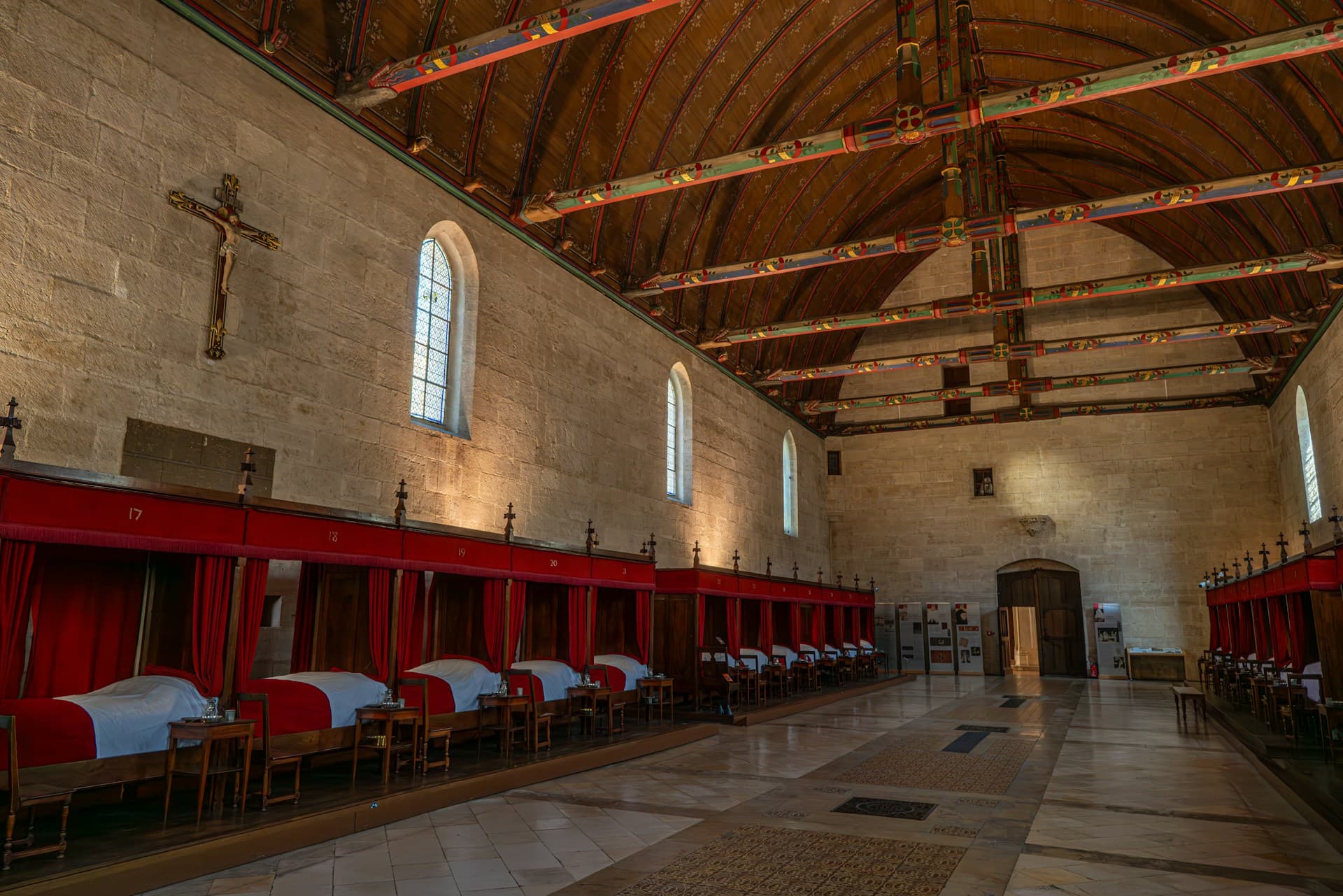
The courtyard commands immediate attention: its galleries with small columns, sculpted dormers, and especially its geometric glazed tile roof — yellow, black, red, brown — form a unique architectural tableau. Inside, the Grande Salle des Povres preserves its canopied beds aligned beneath a ship's keel-shaped timber frame. The museum displays ancient medical instruments, Flemish tapestries, and Rogier van der Weyden's polyptych of the Last Judgment.
History and context
Nicolas Rolin, chancellor to Duke Philip the Good of Burgundy, founded the Hôtel-Dieu in 1443 with his wife Guigone de Salins. The establishment welcomed indigent patients for over five centuries — the last residents left in 1971. From 1859 onward, a wine auction from vineyards bequeathed to the institution has funded its operations; this auction, held on the third Sunday in November, continues to set reference prices for Burgundy's greatest wines.
Highlights of the visit
The glazed tile roof
Viewed from the inner courtyard, the roof is Beaune's iconic image. The geometric patterns in colored lozenges stem from a 15th-century Burgundian-Flemish tradition. Regular restoration maintains the brilliance of the glazes.
The Grande Salle des Povres
This 72-meter-long room preserves its red canopied beds arranged in two facing rows. A glass chapel at the far end allowed patients to hear Mass without rising. The medieval atmosphere is striking.
The Last Judgment polyptych
Commissioned from Rogier van der Weyden around 1445–1452, this nine-panel altarpiece depicts the Last Judgment with the anatomical precision and dramatic intensity characteristic of Flemish painting. It is displayed in a dedicated room with an optical magnifier for observing details.
The historic pharmacy
The pharmacy preserves its faience jars, alembics, and period mortars. It illustrates five centuries of medical and pharmaceutical practice within the institution.
Photography tips
Late morning light illuminates the roof from the courtyard without backlighting. Arrive early to avoid groups. The Grande Salle des Povres is dimly lit: a fast lens or optical stabilization is helpful. Photography is permitted in most areas; check for any restrictions around the polyptych.
Location and access
The Hospices are located on Rue de l'Hôtel-Dieu, in the historic center of Beaune. The town is served by the Paris–Lyon–Marseille TGV line, with a stop at Beaune station. By car, Beaune is accessible from the A6 motorway (Beaune exit). The ramparts of Beaune and the Notre-Dame Collegiate Church are within a few minutes' walk.
Nearby attractions
- Notre-Dame Collegiate Church of Beaune — Romanesque and Gothic church housing tapestries of the Life of the Virgin, a stone's throw from the Hospices.
- Ramparts of Beaune — a walk along the medieval fortifications encircling the historic center.
- Route des Grands Crus — a wine route linking Dijon to Santenay, skirting Burgundy's most prestigious appellations.
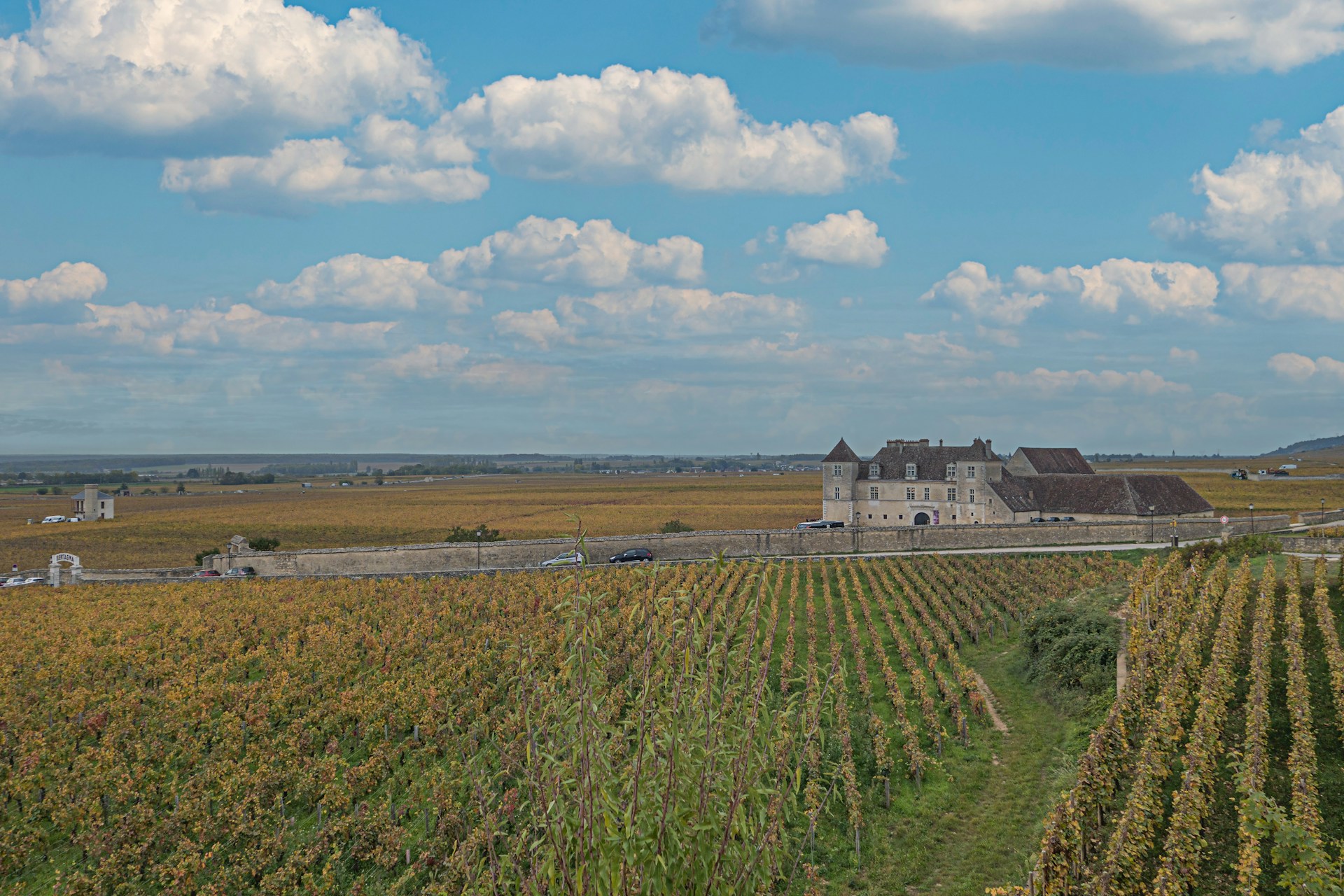
- Château du Clos de Vougeot — seat of the Confrérie des Chevaliers du Tastevin, about twenty kilometers to the north.
Frequently asked questions
The site is open year-round. On the third Sunday in November, the wine auction attracts an international crowd and the atmosphere throughout the town is festive, but the Hospices are very busy. Spring and autumn offer a good balance between moderate crowds and favorable light for photography.
Allow 1.5 to 2 hours to explore the courtyard, Grande Salle des Povres, pharmacy, and polyptych room. With the audioguide and careful reading of labels, the visit may exceed 2 hours.
Yes. Notre-Dame Collegiate Church and the ramparts are within a ten-minute walk. A day is sufficient to visit the Hospices in the morning and explore the historic center in the afternoon.
Photography is generally permitted in the courtyard and most rooms. Restrictions may apply around Van der Weyden's polyptych; inquire at the reception desk during your visit.
The courtyard is accessible. Some historic rooms have thresholds or paved floors that may be challenging for wheelchair users. It is advisable to contact the museum beforehand to learn about available accommodations.
On the third Sunday in November, wines from vineyards bequeathed to the institution over the centuries are auctioned. The prices obtained serve as a barometer for the Burgundy vintage. The auction is open to professionals and private buyers.
Interested in this visit?
We can include it in your personalised itinerary.