Ecrins National Park
Ecrins National Park
Over 900 km² of high alpine mountain between Hautes-Alpes and Isère: Ecrins National Park brings together glaciers, wild fauna and 4,000 m peaks in a preserved and regulated setting.
Ecrins National Park extends across the departments of Hautes-Alpes and Isère, covering over 900 km² of central zone. Glaciers, peaks exceeding 4,000 m, deep valleys and flowering alpine meadows make up an alpine territory among the wildest in France. It is the country's highest national park, centered on Barre des Écrins (4,102 m). Hikers, alpinists and naturalists find exceptional terrain here, far from developed resorts.
Quick reference information
- Access: main entrance points from Briançon, Gap, Le Bourg-d'Oisans, Vallouise-Pelvoux, La Chapelle-en-Valgaudemar.
- Admission: free — the park is an open natural space.
- Central zone: strict regulations (bivouacking regulated, dogs prohibited, foraging prohibited).
- Recommended duration: from a day hike to several weeks for the complete circuit.
- Best season: July-September for high mountain; June and October for valleys.
- Accessibility: limited in central zone; some valley-floor trails are accessible.
What to see
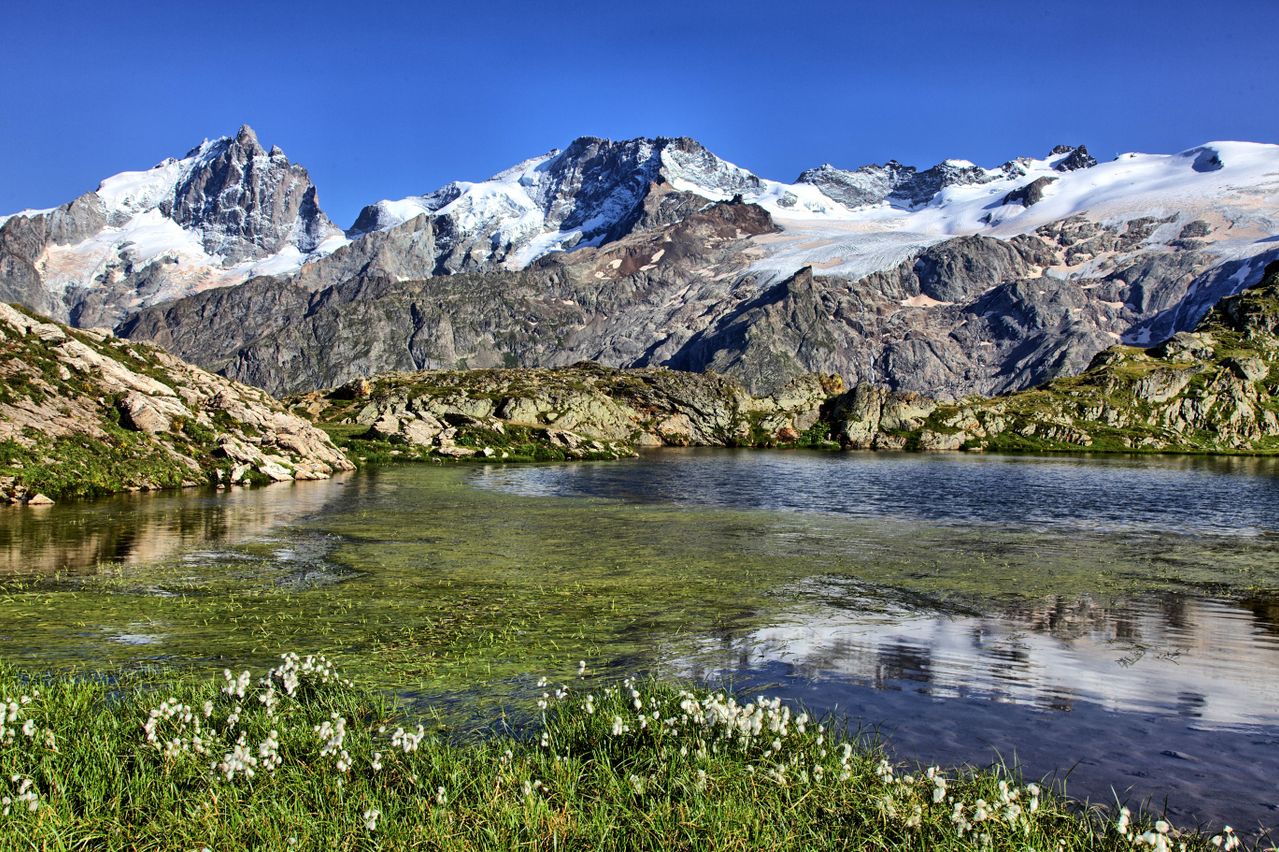
The park is home to around one hundred glaciers, including Glacier Blanc, one of the most accessible in the French Alps. Flora encompasses over 1,800 plant species, many of them endemic. Wildlife-wise, ibex, chamois, marmots, golden eagles and bearded vultures are regularly spotted. Flowering alpine meadows between June and August offer landscapes characteristic of the Southern Alps.
History and context
Created in 1973, Ecrins National Park is one of ten French national parks. It succeeded a nature reserve established as early as 1913 around the Pelvoux massif. The Écrins massif was a major site of 19th-century mountaineering exploration: Barre des Écrins was first climbed in 1864 by a rope team led by Edward Whymper and A. W. Moore.
Highlights of the visit
Glacier Blanc and its namesake refuge
From Ailefroide or Pré de Madame Carle, a marked trail leads to Glacier Blanc. The Glacier Blanc refuge, staffed during season, is a classic stopover before an attempt on Barre des Écrins. The view over the glacier and surrounding north faces is breathtaking.
Vénéon Valley and Bourg-d'Oisans
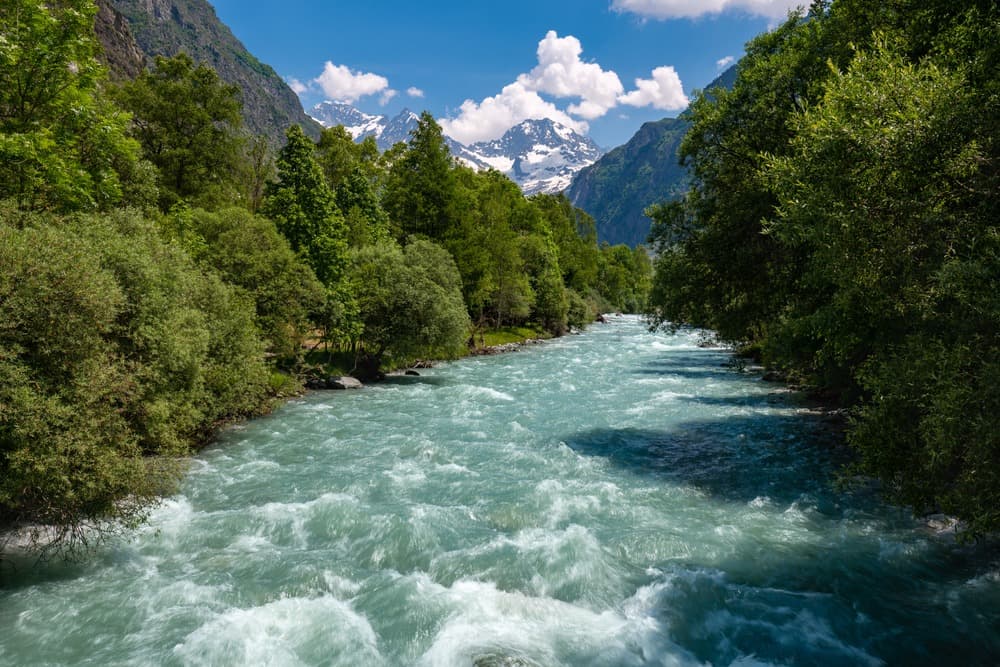
The Vénéon Valley, narrow and rarely visited, penetrates deep into the massif from Saint-Christophe-en-Oisans. Mountaineers' hamlets, waterfalls and rock faces make it one of the park's wildest valleys.
Valgaudemar Valley
On the Hautes-Alpes side, Valgaudemar Valley is renowned for its waterfalls, including Casset Falls, and routes to high-altitude refuges. The atmosphere here is more intimate than in Oisans.
The Écrins Circuit
A multi-day trekking route, the circuit around the massif links passes, refuges and panoramas over the 4,000 m peaks. It suits experienced hikers, self-sufficient in mountains.
Etiquette and visiting rules
- In central zone: bivouacking permitted only beyond one hour's walk from roads and parking areas, single night at same site.
- Dogs prohibited in central zone, even on leash.
- Foraging plants, minerals and fossils prohibited.
- Fires prohibited in central zone.
- Respect livestock and livestock guardian dogs (patous): go around them, do not run.
Photography tips
Low-angle light on glaciers and north faces is optimal between 6 a.m. and 9 a.m. in summer. Flowering alpine meadows are photogenic from mid-June to mid-July. For wildlife, the first hours after sunrise and late afternoon are best. No particular photography restrictions, but drones are prohibited in central zone.
Location and access
The park extends between Hautes-Alpes and Isère. Main road access points:
- From Grenoble: RN91 toward Le Bourg-d'Oisans, northwest gate of the park.
- From Gap: access to southern valleys (Valgaudemar, Champsaur) and Vallouise.
- From Briançon: access to Vallouise-Pelvoux and Pré de Madame Carle.
- Public transport: seasonal coach links from Briançon and Gap to certain valleys; check with local networks.
Park centers and guide offices are present in main valleys for advice and weather information.
Nearby
- Briançon (old town with Vauban fortifications) — UNESCO-listed fortified city at the park's eastern entrance.
- Alpe d'Huez — ski resort and starting point for summer hikes, above Bourg-d'Oisans.
- Bourg-d'Oisans — stopover village and mineral museum, north entrance to the park.
- Mercantour National Park — another major French alpine park, to the southeast.
Photos
Discover Ecrins National Park with our itineraries
All our tours →
Interested in this visit?
We can include it in your personalised itinerary.