Chartreuse Massif
Chartreuse Massif
Between Grenoble and Chambéry, the Chartreuse Massif blends dense forests, limestone gorges and monastic heritage. A hiking and nature destination within an hour of two major Alpine cities.
The Chartreuse Massif extends between Grenoble and Chambéry, in the French Pre-Alps. Limestone, beech and spruce forests, vertical cliffs and narrow valleys compose a landscape of rare coherence. It is also the birthplace of the Carthusian order, founded in the 11th century, whose Grande Chartreuse monastery remains its spiritual heart. The massif has been designated a Regional Nature Park since 1970 and offers terrain for hiking, climbing and cross-country skiing within an hour of two major Alpine cities.
Quick Practical Info
- Access from Grenoble: several departmental roads penetrate the massif (Porte Pass, Guiers Mort Gorges, Guiers Vif Gorges).
- Access from Chambéry: via Les Échelles or Saint-Pierre-de-Chartreuse.
- Recommended duration: minimum weekend to combine hiking, monastery and villages; one week to explore in depth.
- What to wear: hiking boots recommended even on mid-mountain trails; warm clothing essential even in summer (altitude up to 2,082 m at Chamechaude).
- Entry: free access to the massif; Grande Chartreuse museum is paid.
What to See
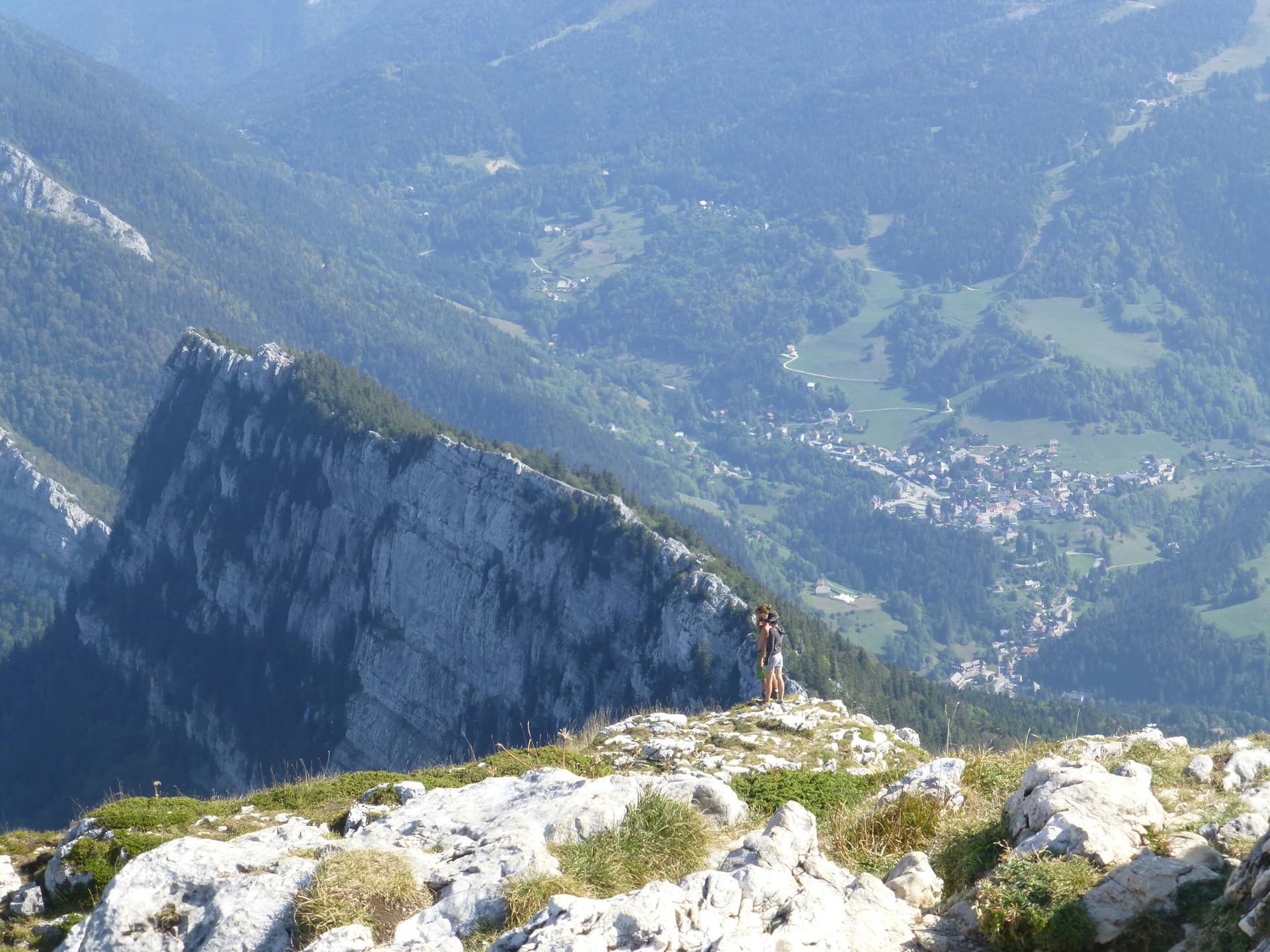
The massif alternates between high karst plateaus, deep gorges and limestone peaks. Chamechaude (2,082 m) dominates the landscape to the south. The Guiers Mort and Guiers Vif gorges carve spectacular canyons. The villages of Saint-Pierre-de-Chartreuse and Saint-Laurent-du-Pont serve as convenient bases. In winter, the Chamrousse and Porte Pass ski stations offer alpine and cross-country skiing.
History and Context
In 1084, Saint Bruno of Cologne founded the Carthusian order in this isolated valley. The Grande Chartreuse monastery, rebuilt several times after fires and avalanches, remains the mother house of the order. The monks still produce Chartreuse liqueur here, its recipe dating from the 18th century. The Chartreuse Regional Nature Park, created in 1970, covers approximately 77,000 hectares and protects one of France's best-preserved pre-Alpine massifs.
Highlights of Your Visit
Grande Chartreuse and Its Museum
The monastery itself is closed to the public — the monks live there under strict enclosure. The Grande Chartreuse Museum, located nearby, traces the history of the order and monastic life. The road leading to it, enclosed within the Guiers Mort gorges, is spectacular.
Hiking to Chamechaude
The massif's highest peak, Chamechaude offers panoramic views over Grenoble, Belledonne and the Vercors. The ascent from Porte Pass is accessible to experienced hikers. The trail winds through dense forests before reaching the limestone karren formations at the summit.
Guiers Vif Gorges
Between Saint-Christophe-sur-Guiers and Les Échelles, the Guiers Vif gorges form one of the massif's most dramatic entrances. The road carved into the cliff winds along the river for several kilometres.
Porte Pass and Northern Plateaus
In winter, Porte Pass is one of the cross-country skiing destinations closest to Grenoble. In summer, it serves as a departure point toward the ridges and alpine pastures.
Photography Tips
Morning light on the Chamechaude cliffs is particularly sharp between May and October. The Guiers Mort gorges photograph best at midday, when light penetrates the canyon floor. In autumn, the beech forests turn russet and offer striking contrasts with the grey limestone. Avoid low-cloud days: the massif is often shrouded in clouds in autumn and winter.
Location and Access
The massif is framed by Grenoble to the southeast and Chambéry to the north. The two cities are connected by the A41 motorway, which runs along the massif's eastern flank. From Grenoble, Porte Pass is reachable by car in less than 30 minutes. Bus services connect Saint-Pierre-de-Chartreuse to Grenoble. Accessibility for people with reduced mobility is limited in the mountains; the Grande Chartreuse museum has partial facilities.
Local guides offer guided hikes departing from Saint-Pierre-de-Chartreuse and Grenoble.
Nearby Attractions
- Grenoble — capital of the French Alps, with museums and an old town at the foot of the massif.
- Vercors Massif — limestone plateau southwest of Grenoble, ideal for hiking and cycling.
- Chambéry — former capital of the Dukes of Savoy, at the northern entrance to the massif.
- Belledonne Massif — crystalline range east of Grenoble, for mountaineering and alpine lakes.
Discover Chartreuse Massif with our itineraries
All our tours →
Want to discover this destination?
Our local advisors design your tailor-made trip.