Belledonne Massif
Belledonne Massif
Rising east of Grenoble, the Belledonne Massif spans 80 km of crystalline ridges, glacial lakes and wild alpine pastures — the perfect playground for hiking and cross-country skiing.
The Belledonne Massif stretches nearly 80 km between Chambéry and the Valbonnais, dominating Grenoble to the east. Its crystalline ridges peak at Grand Pic de Belledonne (2,978 m) and shelter a chain of glacial lakes, coniferous forests and alpine pastures. It's a four-season playground for hiking, cross-country skiing, mountaineering and snowshoeing, remaining wilder than its neighbouring Chartreuse and Vercors massifs.
Quick reference guide
- Access from Grenoble: multiple entry valleys — Vizille/Vénon to the south, Chamrousse at centre, Allevard to the north — all accessible by car.
- Recommended duration: a weekend for a hike with a night in a refuge; a single day suffices for lower-altitude lakes.
- Season: hiking from June to October; cross-country skiing and snowshoeing from December to March depending on snow conditions.
- Equipment: mountain boots essential from altitude trails onwards; IGN maps 3334 OT or 3335 OT recommended.
- Refuges: several staffed refuges in summer (advance booking advised) allow multi-day traverses across the massif.
What to see
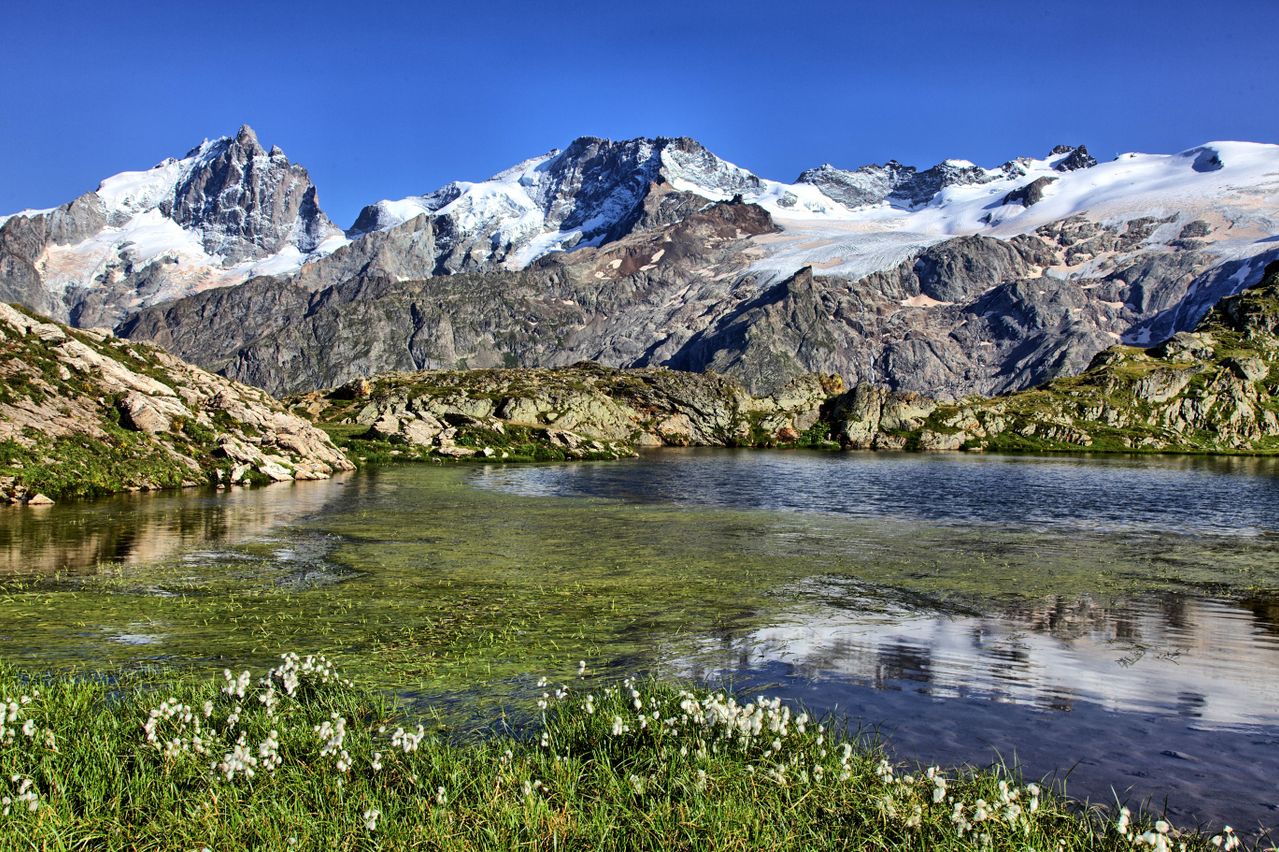
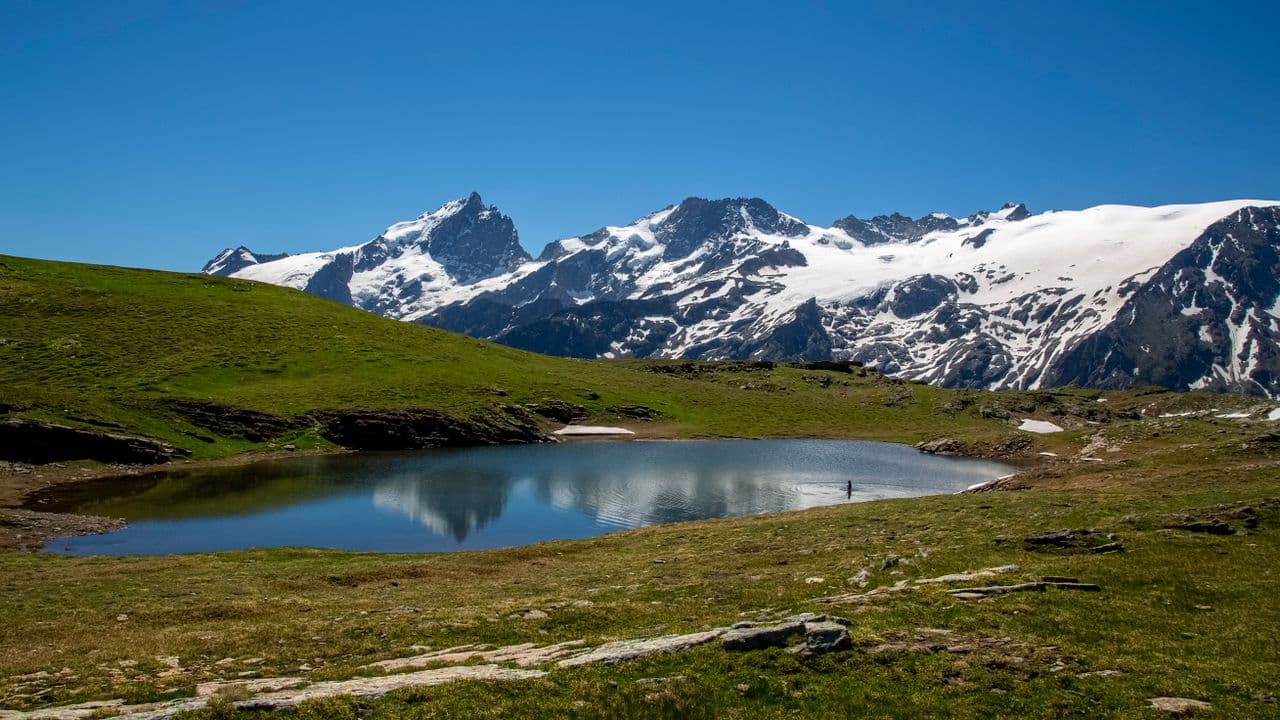
The massif stands out for its glacial lakes — Longet Lake, Crozet Lake, Croix Lakes — nestled in rocky cirques. The ridges command panoramas over the Écrins, Mont-Blanc and Chartreuse. In the valleys, villages like Pinsot, Laval and Le Pleynet preserve Savoyard rural architecture. Wildlife includes chamois, ibex and marmots, easily spotted at altitude.
History and context
Belledonne is an ancient crystalline massif, composed of gneiss and micaschist, uplifted during the Alpine orogeny. Once exploited for its iron mines — Allevard was renowned for metallurgy — the range gradually turned toward mountain tourism in the twentieth century. Chamrousse, a station built for the 1968 Grenoble Winter Olympics, remains the massif's most celebrated site.
Highlights of your visit
Grand Pic de Belledonne (2,978 m)
The massif's highest point, accessible via Col de la Pra from Chamrousse. The ascent demands solid fitness and proper gear. The 360° panorama sweeps across the Northern and Southern Alps.
Crozet Lakes
Reachable from Chamrousse in two to three hours' walk, these turquoise glacial lakes rank among the massif's most visited. Ideal for a first high-altitude hike with children.
Belledonne Cross
An emblematic summit visible from Grenoble, often snow-capped in winter. Multiple routes lead here from the Eau d'Olle and Romanche valleys.
Chamrousse and its Nordic domain
An Olympic station at 1,650–2,250 m offering alpine skiing, cross-country skiing and snowshoeing in winter, mountain biking and hiking in summer. A cable car whisks you swiftly to the ridges.
Photography tips
Golden morning light on glacial lakes is optimal between 7 am and 9 am in summer. Ridges deliver spectacular backlit shots late in the afternoon. In autumn, larch trees turn vivid yellow — October offers the best colours. No photography restrictions in the massif, but Natura 2000 zones require you to stay on marked trails.
Location and access
The massif borders the Grenoble conurbation to the east. From Grenoble, the main entry points are:
- Chamrousse: 30 km via D111 through Uriage-les-Bains.
- Allevard: 40 km north via A41 then D525.
- Vizille / Romanche valley: southern access via N85.
No direct rail link to altitude stations; car or seasonal shuttles from Grenoble are your best bet. Disabled access limited to station fringes (Chamrousse offers some facilities).
Around the area
- Grenoble — capital of the French Alps, less than an hour from all massif entry points.
- Chartreuse Massif — west of Grenoble, limestone landscapes and the Grande Chartreuse monastery.
- Vercors Massif — south-west, high plateaus and spectacular gorges.
- Uriage-les-Bains — elegant spa town on the road to Chamrousse.
- Allevard — thermal village and northern gateway to the massif, a former metallurgical hub.
Frequently asked questions
Mid-June through late September, once snow melts from the ridges. July and August offer the clearest trails; September is perfect for avoiding crowds and catching the first autumn colours.
Yes, for low and mid-altitude routes. The Crozet Lakes from Chamrousse or trails around Allevard suit children aged 6 and up with proper footwear.
In July and August, advance booking is strongly advised, especially for staffed refuges on traversal routes. Outside peak season, some unstaffed refuges remain open on a first-come basis.
Easily. A day in town (Grenoble Museum, Bastille) and a day in the mountains arrange without fuss from Grenoble, with massif entry points just 30–40 minutes by car.
Several massif sectors are Natura 2000 designated. You're asked to stay on marked trails, avoid picking plants and keep dogs leashed to protect wildlife.
Seasonal shuttles link Grenoble to Chamrousse in winter (ski season) and occasionally in summer. Outside these windows, a car remains the most practical option.
Discover Belledonne Massif with our itineraries
All our tours →
Want to discover this destination?
Our local advisors design your tailor-made trip.