Balagne
Between Calvi and L'Île-Rousse, an amphitheater of perched villages, clear-sand beaches and AOP vineyards, for 4 or 5 days of exploration.
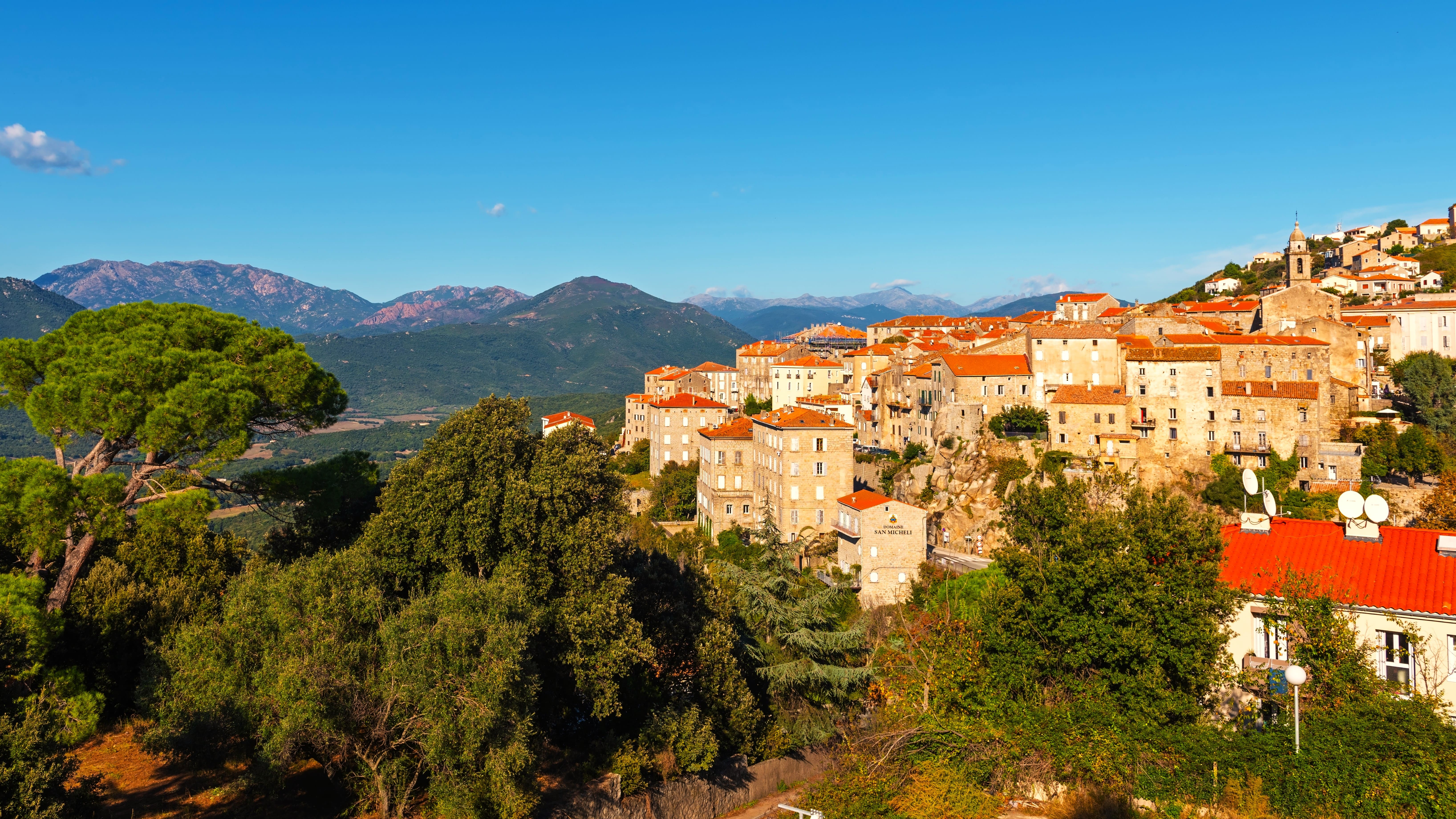
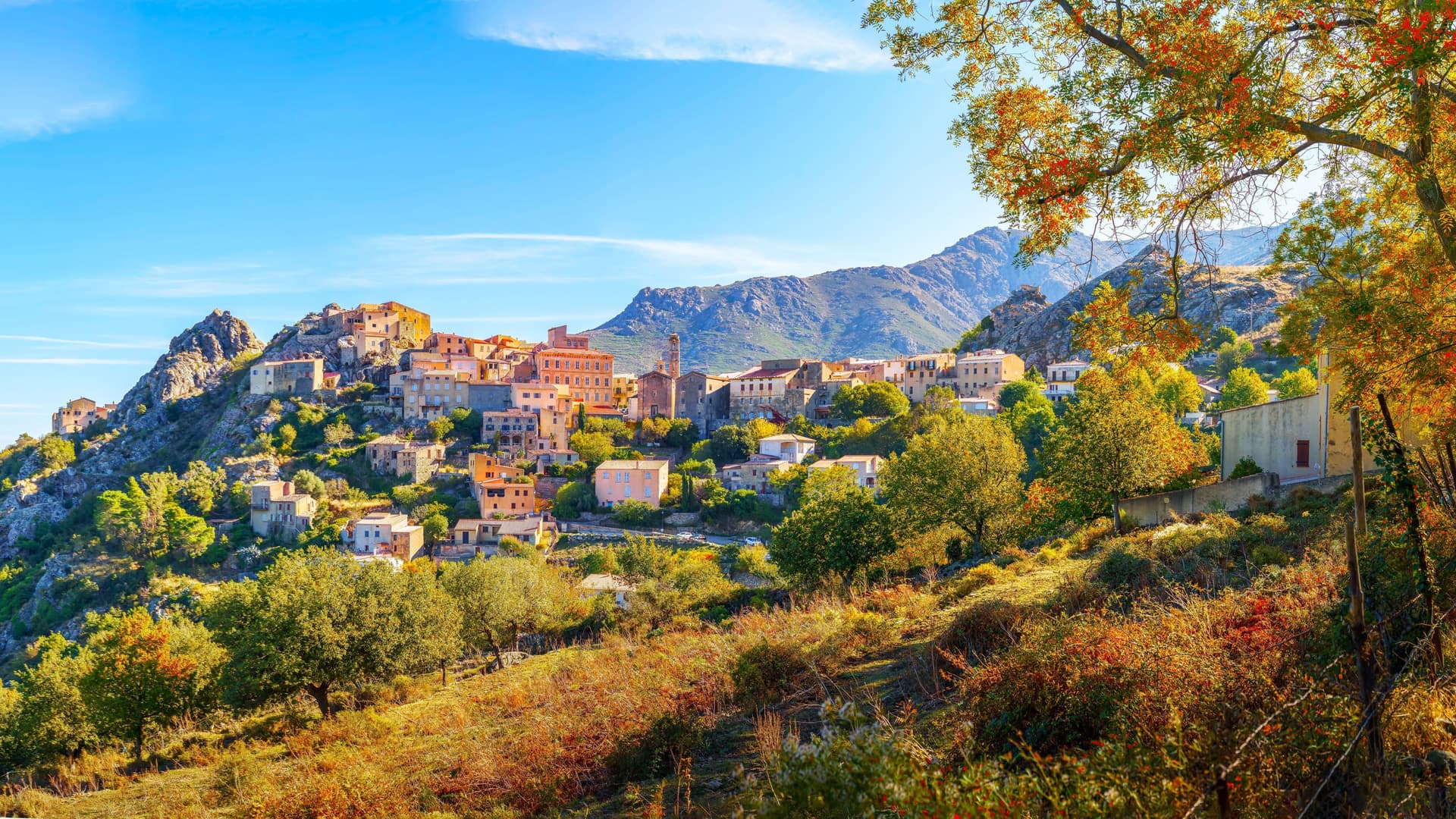
Balagne occupies the northwestern quarter of the island, between the Revellata headland west of Calvi and the mouth of the Ostriconi river to the east. Our team often describes it as an amphitheater: a coastal plain spanning 40 kilometers open to the sea, backed by a ridge line culminating at Monte Padro (2,393 m) and Monte Grosso (1,937 m). This configuration explains the region's dry microclimate and the unusual density of hilltop villages perched between 300 and 700 meters in altitude, positioned on the foothills to escape the old Barbary raids.
The two main coastal poles are Calvi, dominated by its 13th-century Genoese citadel and marina, and L'Île-Rousse, founded in 1758 by Pascal Paoli to rival Genoese Calvi. Between the two, stretching across some twenty kilometers, lies a string of clear-sand beaches: Algajola, Bodri, Lozari, Ostriconi. The hinterland is structured by the artisan route, a marked itinerary connecting a dozen villages where cutlers, cetera lute makers, glassblowers, music box makers and jam producers still work. Pigna, Sant'Antonino (one of Corsica's oldest villages, perched at 500 m on a rocky peak), Corbara with its Dominican convent, Speloncato and its Baroque church, Aregno and its polychrome granite Pisan church form the backbone of this circuit.
Balagne was long known as Corsica's garden. Olive terraces, some dating back to the Genoese era, still produce AOP oil, and we regularly take our travelers to the Marina d'Argentella mill or to Montegrosso producers. The region is also home to Calvi AOP wines: nine estates work niellucciu, sciaccarellu and vermentino grapes on the argillous-schistose hillsides of Calenzana and Lumio. At table, expect to find fresh brocciu in spring, veal with olives, zucchini fritters and migliacciu, a brocciu galette cooked on chestnut leaves.
Calenzana, 12 km from Calvi, is the starting point of the GR20, which reaches Conca 180 km and fifteen stages later. This gateway to the trail draws a stream of hikers between June and September, but Balagne also offers shorter walks: Bonifatu and its laricio pine forests, the postman's path between Girolata and Galéria, the Capu di a Veta ridge above Calvi (703 m, a 3-hour climb with views across the entire bay). In July, the Calvi on the Rocks festival draws a young crowd to the beach, while the Calvi Polyphonic Encounters in mid-September gather sacred choral ensembles from Georgia, Sardinia and the Basque Country in the Saint-Jean-Baptiste cathedral. This is our preferred season for introducing the region.
Why spend time here: Balagne concentrates rare diversity across 50 kilometers—family beaches, inhabited hilltop villages, vineyards, living craftsmanship and access to two major natural reserves (Scandola and the Fango valley). Yet it remains less crowded than the island's south outside July-August, and its Calvi-Sainte-Catherine airport allows direct access from several French and European cities in season.
Things to discover
Artisan route from Pigna to Speloncato. A 25 km loop between schist villages, cetera lute maker and cutlery workshops, and guesthouses facing south toward the Calvi bay. Allow a full day including lunch in Sant'Antonino.
Scandola Reserve from Calvi. A 6 to 8-hour boat excursion to the red rhyolitic organs of Scandola, a UNESCO site, with a stop in Girolata, a hamlet accessible only by sea or mule path. The sea is generally calm between May and September.
Algajola and Ostriconi beaches. Fine sand, shallow waters extending over 50 meters, ideal for families with young children. Ostriconi, east of Lozari, overlooks the Agriates desert and remains accessible on foot after 15 minutes' walk.
Bonifatu forest and Bonifatu cirque. 25 km from Calvi, a valley of century-old laricio pines and pozzines at the foot of granite spires. Several loop trails of 2 to 5 hours, including the Spasimata footbridge on the GR20.
Calvi Polyphonic Encounters. Mid-September, a week of sacred choral concerts in the citadel and Saint-Jean-Baptiste cathedral. Corsican, Sardinian, Georgian and Bulgarian ensembles. Our recommended season for combining culture and shoulder-season travel.
When to go
Balagne enjoys Corsica's driest climate, with roughly 600 mm of annual rainfall concentrated over November-December and March. We recommend three windows: May-June for hiking and flowering maquis (temperatures 22 to 26°C, sea at 19-21°C), September for shoulder-season swimming (28°C daytime, sea still at 23°C through mid-October), and early October for grape harvest and very low crowds. July and August remain viable but the Calvi-L'Île-Rousse corridor saturates, rents double and villages like Sant'Antonino are better visited before 10am or after 6pm.
In winter, December to February, the coast remains mild (12 to 15°C daytime) but many hotels and restaurants on the artisan route close from November to March. Conversely, the hinterland above 1,500 m, toward Monte Padro and the Vergio pass, can be snow-covered until April, making the GR20 impassable before June for unprepared hikers.
Practical advice
We recommend 4 to 5 full days for Balagne: one day for Calvi's coast and citadel, one day on the artisan route, one day by boat to Scandola and Girolata, one day hiking at Bonifatu or Capu di a Veta, and a half-day for vineyards or Ostriconi beach. Calvi-Sainte-Catherine airport, 7 km from the center, serves several French and European cities from April to October. Outside season, access is via Bastia (2h15 drive) or the L'Île-Rousse ferry.
The region naturally pairs with Cap Corse to the northeast (3 hours' drive) for a northern circuit, or with the West Coast and Porto Gulf to the south (1h30 via the scenic Corniche road, one of the island's most spectacular) to continue through Scandola, the Piana coves and Porto. For two-week travelers, we often loop back through the Mountain Interior via Corte. Balagne suits families with children (beaches, short hikes, artisan workshops), contemplative couples in shoulder season, and hikers starting the GR20 at Calenzana. Comfort levels are high: characterful guesthouses in villages, 4-star hotels on the coast, fine dining tables in Lumio and Montegrosso.